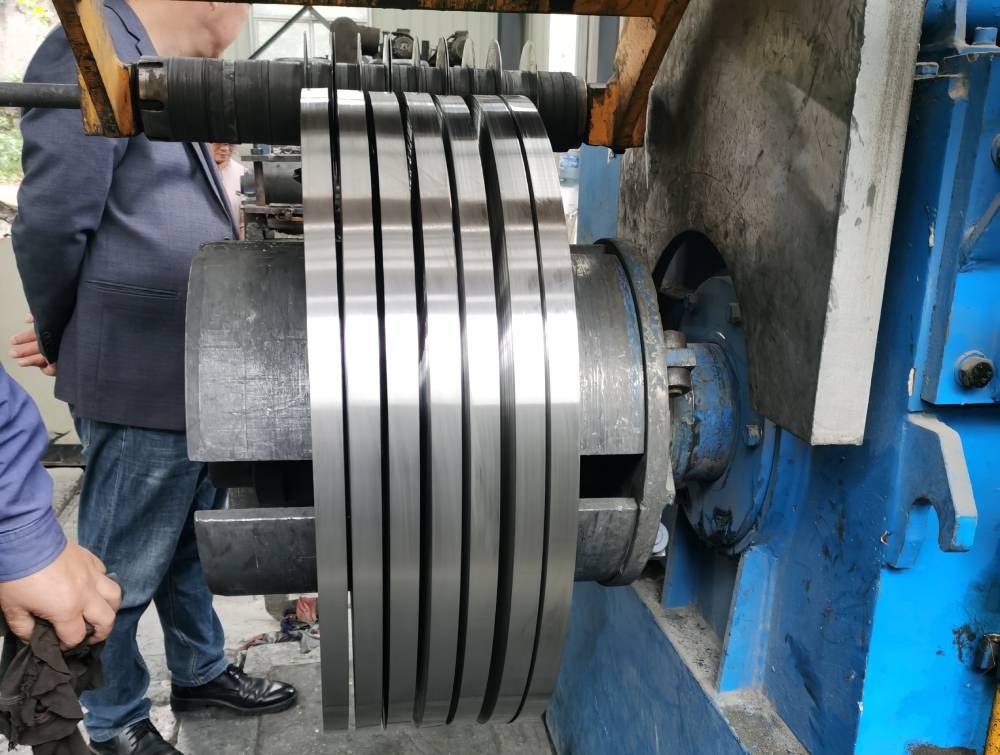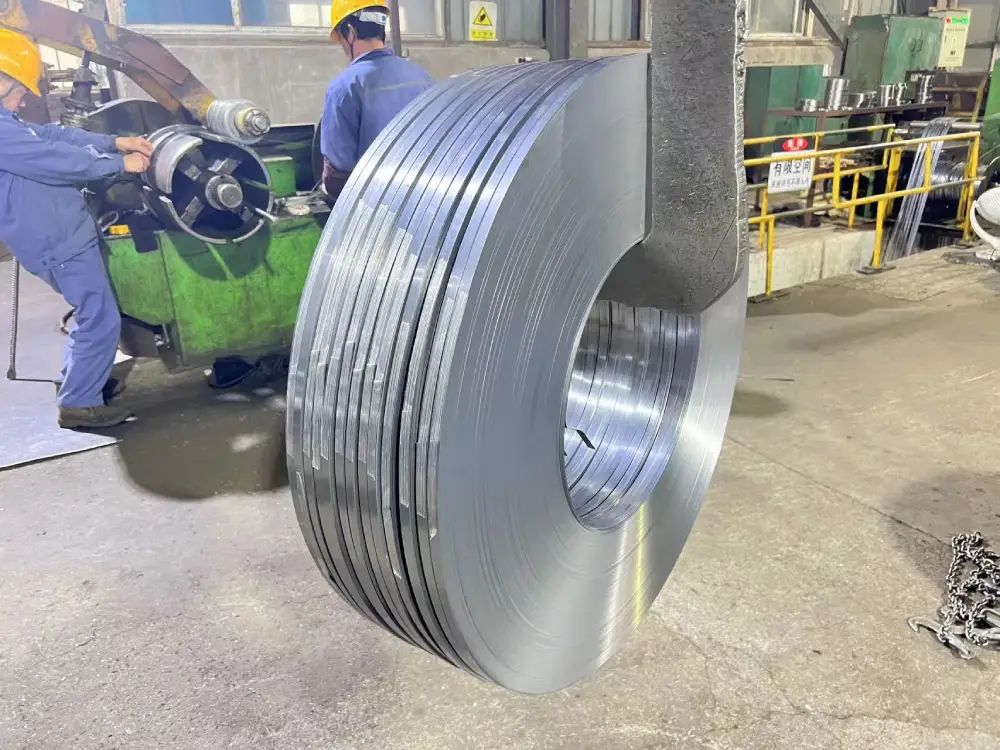
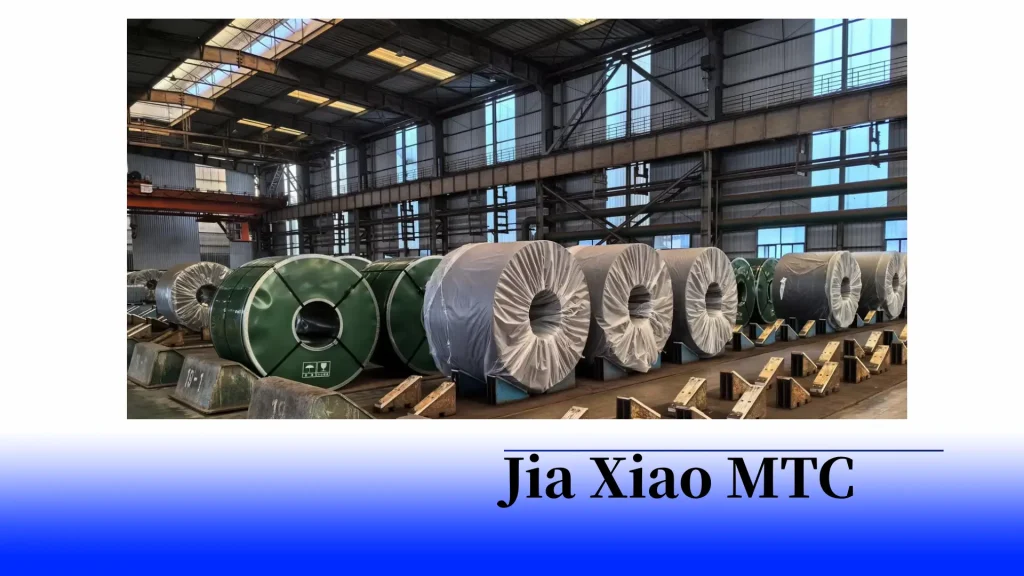
Heat-treated steel strips are widely recognized for their superior mechanical properties, including enhanced hardness, độ dẻo dai, và độ bền. These attributes are achieved through the precise application of hardening and tempering processes. This article provides a comprehensive exploration of how these processes work and their importance in manufacturing.
What is Hardening?
Hardening is a heat treatment process designed to increase the hardness and strength of steel strips. This is achieved by heating the steel to a temperature above its critical transformation point, followed by rapid cooling, usually in water, oil, or air.
Key Features of Hardening:
- Transformation of Structure: The steel’s crystalline structure changes to martensite, a phase known for its high hardness.
- Improved Strength: Hardening significantly increases the material’s ability to withstand wear and deformation.
- Brittleness: While hardness increases, the steel becomes more brittle, necessitating further treatment.
What is Tempering?
Tempering is performed after hardening to reduce brittleness while maintaining the desired hardness. This involves reheating the steel to a temperature below its critical point and holding it for a specific period before allowing it to cool.
Key Features of Tempering:
- Improved Toughness: Tempering enhances the steel’s resistance to impact and shock.
- Reduced Internal Stresses: It alleviates stresses introduced during the hardening process.
- Adjustable Properties: By controlling the tempering temperature, the steel’s hardness and toughness can be fine-tuned for specific applications.
Steps in the Hardening and Tempering Process
- Preparation:
- Select the appropriate steel grade, such as 75Cr1, 51CRV4, or 60Si2Mn, based on the desired properties.
- Ensure the steel is clean and free of contaminants.
- Hardening:
- Heat the steel strip uniformly to the critical transformation temperature (VÍ DỤ., 800–900°C, depending on the grade).
- Quench the heated steel rapidly in water, oil, or air to lock the martensitic structure.
- Ủ:
- Reheat the hardened steel to a lower temperature (VÍ DỤ., 150–700°C) based on the desired balance of hardness and toughness.
- Hold the temperature for a set duration before cooling it gradually.
Applications of Heat-Treated Steel Strips
The hardening and tempering process makes steel strips ideal for high-performance applications, bao gồm:
- Springs: Used in automotive suspension systems, máy móc công nghiệp, and rolling doors.
- Công cụ cắt: Blades, saws, and knives require a combination of hardness for cutting and toughness to prevent chipping.
- Construction Tools: Scrapers, Trowels, and other hand tools benefit from enhanced durability.
- Mechanical Components: Gears, shafts, and couplings that endure high stress and wear.
Advantages of the Hardening and Tempering Process
- Enhanced Mechanical Properties:
- Improved hardness for wear resistance.
- Increased toughness for impact resistance.
- Customizable Performance:
- Properties can be adjusted by varying process parameters.
- Extended Lifespan:
- Reduced wear and failure rates lead to longer service life.
Quality Control in Heat Treatment
To ensure optimal performance, rigorous quality control measures are implemented during the hardening and tempering process:
- Temperature Monitoring: Ensures consistent heating and cooling.
- Hardness Testing: Verifies the steel meets specified requirements (VÍ DỤ., 30-55 HRC).
- Dimensional Inspection: Confirms the steel retains precise dimensions after treatment.
Phần kết luận
The hardening and tempering process is critical in transforming steel strips into high-performance materials suited for demanding applications. By understanding this process, manufacturers can optimize product performance and longevity. If you’re looking for premium heat-treated steel strips phù hợp với nhu cầu của bạn, contact Jiaxiao MTC. for expert guidance and top-quality products.