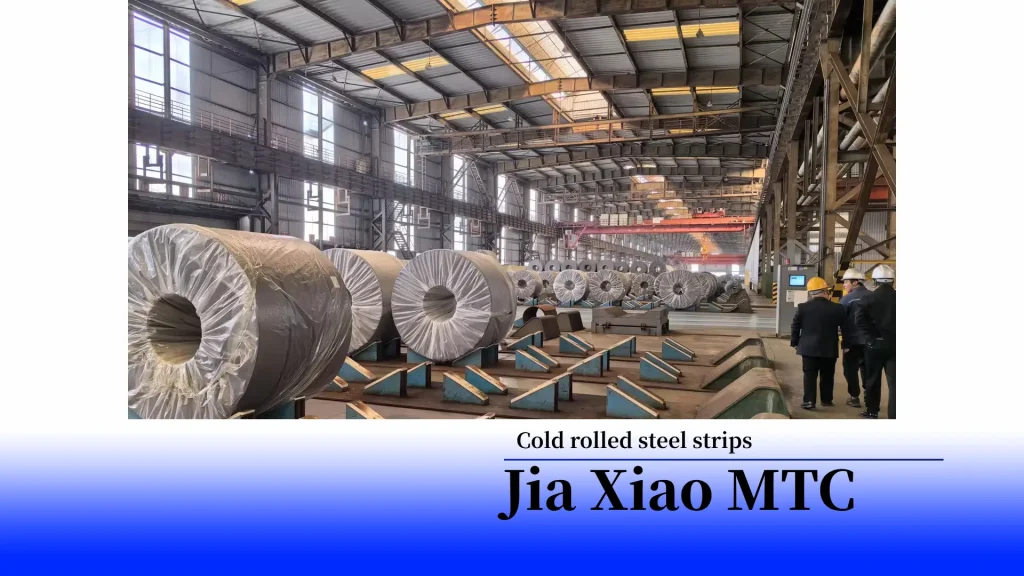
Cold rolled steel strips are a cornerstone of modern manufacturing, known for their exceptional precision, fortaleza, and surface finish. The journey from raw hot rolled steel to the final product involves multiple intricate steps, each contributing to the strip’s quality and performance. This article explores the step-by-step production process of cold rolled steel strips and its significance.
Paso 1: Pickling
The process begins with pickling, where hot rolled steel coils are treated with acid to remove surface oxidation and scale. This step ensures a clean surface, essential for subsequent processing.
Key Benefits:
- Eliminates impurities like rust and scale.
- Prepares the steel for uniform cold rolling.
Paso 2: Laminado en frío
After pickling, the steel undergoes cold rolling, a mechanical process performed at room temperature. The steel is passed through rollers to reduce its thickness and enhance its mechanical properties.
Características clave:
- Achieves high precision in thickness and width.
- Improves surface smoothness and uniformity.
- Enhances tensile strength and hardness through work hardening.
Paso 3: Arrasamiento
Leveling is performed to correct shape defects like curvature or twisting. This step ensures that the steel strip is perfectly flat and free of internal stresses.
Ventajas:
- Ensures flatness for high-precision applications.
- Improves dimensional stability.
Paso 4: Recocido
Cold rolled steel strips often undergo annealing to restore ductility and reduce hardness. The strips are heated in a controlled environment and then cooled slowly.
Types of Annealing:
- Bright Annealing: Produces a polished, reflective surface.
- Spherodizing: Enhances ductility for applications requiring significant forming.
Paso 5: Corte y Corte
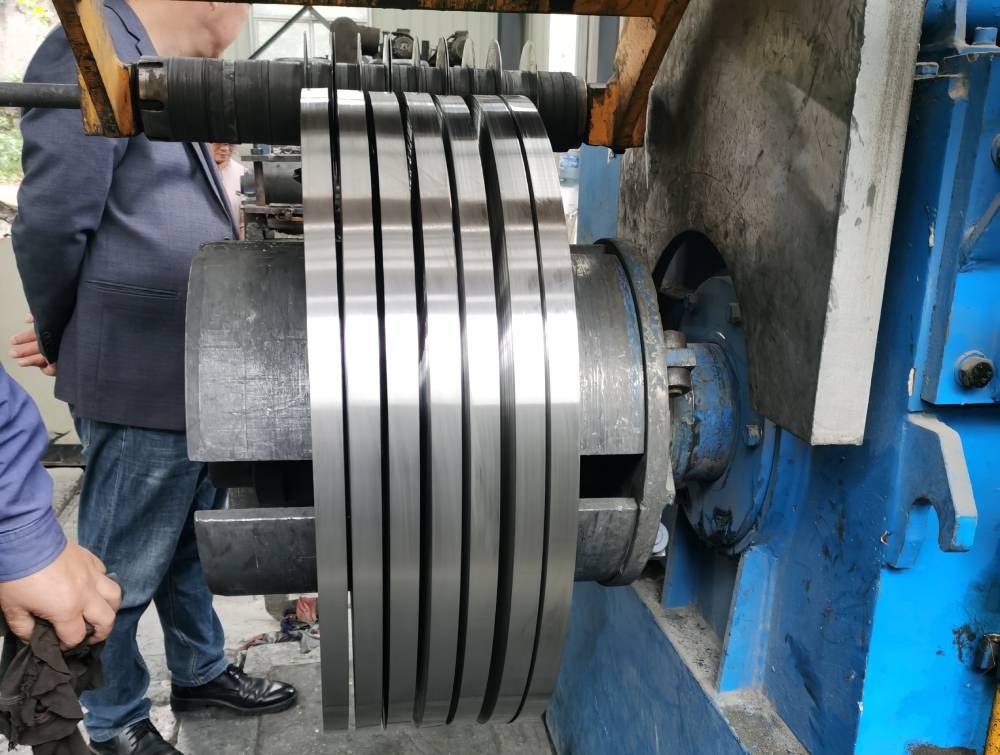
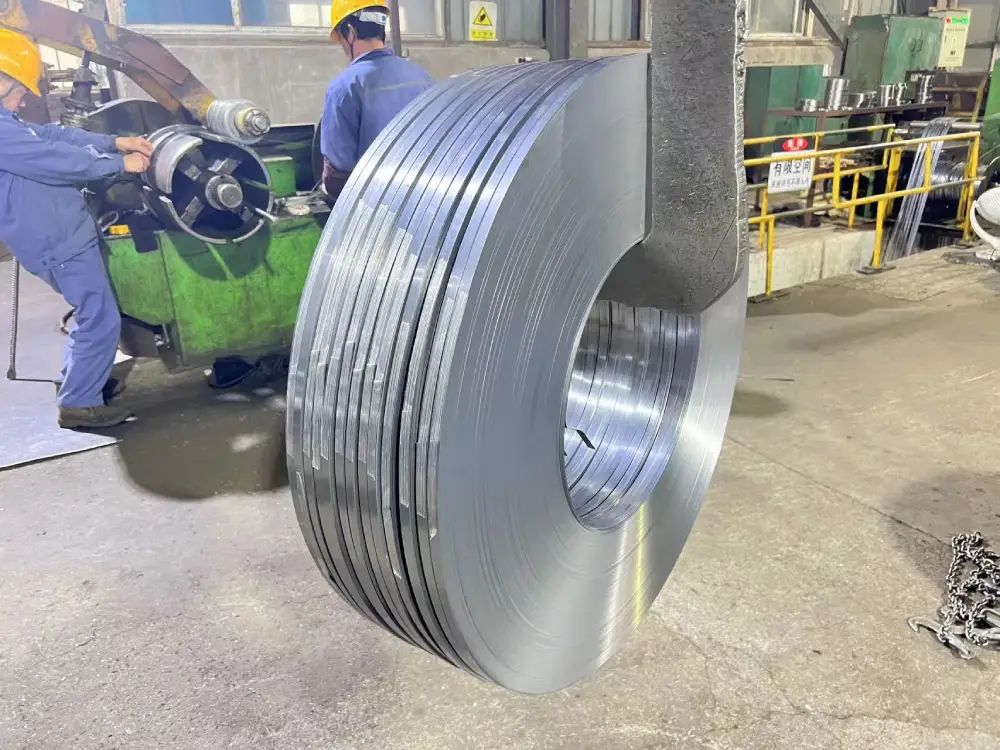
The annealed steel strips are then slit into narrower widths or cut into sheets based on customer requirements. This step is critical for customization.
Opciones de personalización:
- Narrow strips for precision parts.
- Sheets of specific lengths for diverse applications.
Paso 6: Surface Treatment and Finishing
To enhance the appearance and performance of the steel strips, surface treatments like polishing or coating are applied. Edge treatment may also be performed to ensure safety and reduce the risk of fractures.
Typical Surface Finishes:
- Polished or mirror finish for aesthetic applications.
- Matte finish for industrial use.
Quality Control at Every Stage
Throughout the production process, rigorous quality control measures are implemented:
- Thickness Tolerance: Ensures consistent dimensions.
- Surface Inspection: Detects and eliminates defects.
- Mechanical Testing: Verifies tensile strength and hardness.
Applications of Cold Rolled Steel Strips
The versatility of cold rolled steel strips makes them suitable for a wide range of industries:
- Industria automotriz: Used in body panels, componentes estructurales, and trims.
- Construcción: Ideal for roofing, cladding, and decorative elements.
- Accesorios: Found in washing machines, refrigeradores, and kitchen equipment.
- Precision Tools: Used for blades, muelles, and other high-precision components.
Conclusión
The production of cold rolled steel strips is a meticulous process that transforms raw materials into high-performance products. Each step, from pickling to finishing, is designed to ensure quality, precisión, and reliability. By understanding this process, industries can better appreciate the value and versatility of cold rolled steel strips. For premium cold rolled steel strips tailored to your needs, MTC de Jiaxiao is your trusted partner. Contáctanos hoy to explore our extensive product range and solutions.