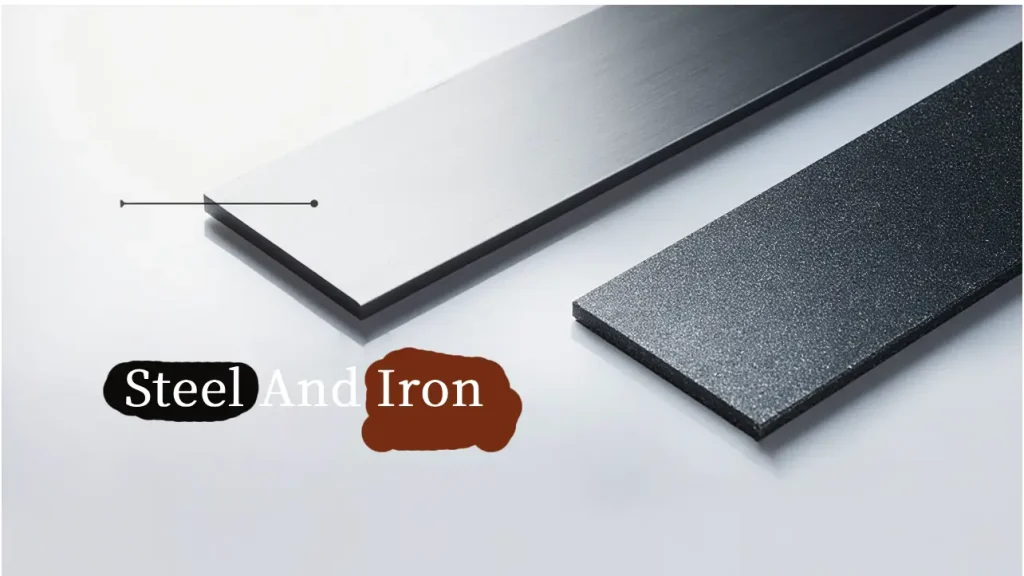
The question “Is steel basically iron?” is common, especially among those unfamiliar with metallurgy or materials science. While steel and iron are closely related, they are not the same. This article clarifies the differences between steel and iron, explores how steel is derived from iron, and discusses various types of steel, bao gồm Low-Alloy Structural (LS) steel.
What is Iron?
Iron is a chemical element with the symbol Fe and atomic number 26. It is one of the most abundant metals on Earth and serves as the primary component in the production of various alloys.
Characteristics of Pure Iron:
- Mềm và dẻo
- Low tensile strength
- Highly susceptible to corrosion
Due to these limitations, pure iron is rarely used in industrial applications.
What is Steel?
Steel is an alloy of iron and carbon, with carbon content typically ranging from 0.02% ĐẾN 2.11% by weight. The addition of carbon and other alloying elements significantly enhances the mechanical properties of iron.
Advantages of Steel Over Pure Iron:
✅ Stronger and harder
✅ More durable
✅ Can be more resistant to corrosion
✅ Highly versatile for industrial applications
How is Steel Different from Iron?
| Tài sản | Sắt | Thép |
|---|---|---|
| Composition | Primarily iron (Fe) | Sắt + Carbon (+ other elements) |
| Sức mạnh | Soft and weak | Stronger and harder |
| độ dẻo | Cao (easily shaped) | Adjustable based on alloy composition |
| Kháng ăn mòn | Highly susceptible to rust | Can be resistant (VÍ DỤ., stainless steel) |
Các addition of carbon and alloying elements transforms iron into a stronger, more useful material—steel.
Types of Steel
There are various types of steel, each with unique properties and applications:
1. Carbon Steel
- Composition: Varying carbon levels (low, medium, high)
- Ứng dụng: Sự thi công, pipelines, Thành phần ô tô
2. Alloy Steel
- Composition: Contains elements like manganese, Niken, chromium
- Ứng dụng: Không gian vũ trụ, automotive, high-stress applications
3. Thép không gỉ
- Composition: Minimum 10.5% chromium for corrosion resistance
- Ứng dụng: Kitchen appliances, medical equipment, architecture
4. Tool Steel
- Composition: Contains tungsten, molybdenum, vanadium for hardness
- Ứng dụng: Cutting tools, dies, molds
5. Low-Alloy Structural Steel (LS Steel)
- Composition: Small amounts of manganese, silicon, Niken, chromium
- Ứng dụng: Bridges, buildings, construction equipment
Is Steel Basically Iron?
While steel originates from iron, it is not simply iron. The differences lie in sáng tác, sức mạnh, corrosion resistance, and overall performance.
Key Differences:
✔ Sức mạnh & Durability → Steel is much stronger than pure iron.
✔ Kháng ăn mòn → Certain types of steel resist rust far better than iron.
✔ Tính linh hoạt → Steel is used in a vast range of industries, whereas pure iron is rarely used.
Phần kết luận
While steel is derived from iron, it is not “basically iron.” The addition of carbon and alloying elements fundamentally transforms it into a stronger, more durable, and more versatile material.
By understanding these differences, engineers, manufacturers, and builders can make informed decisions in selecting materials for safer, more durable, và hiệu quả applications.