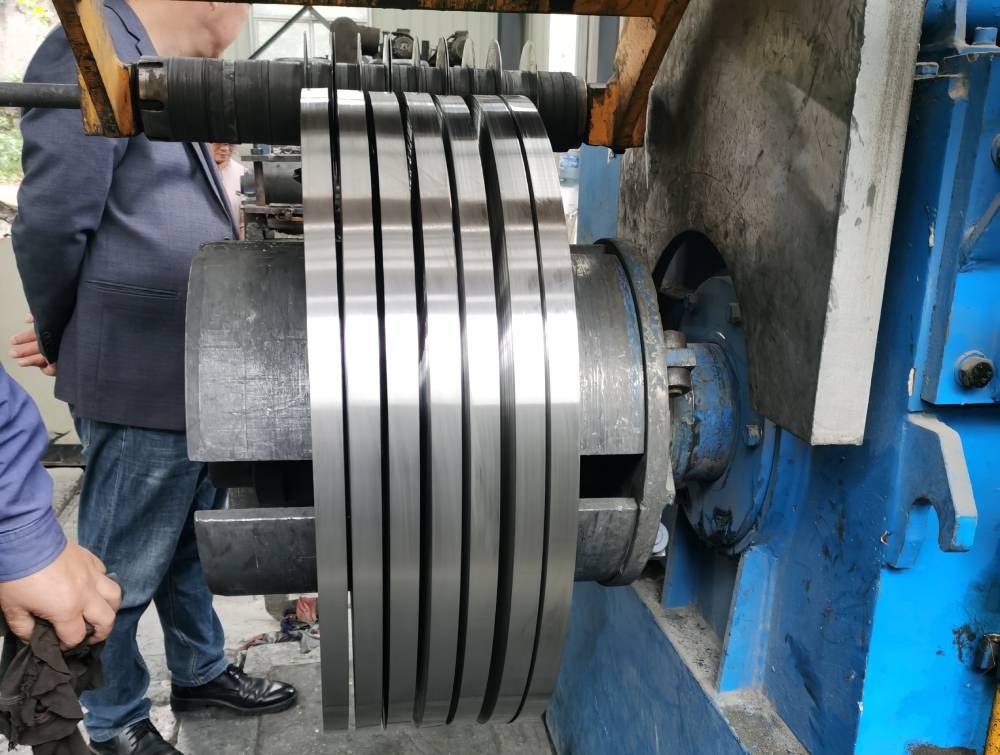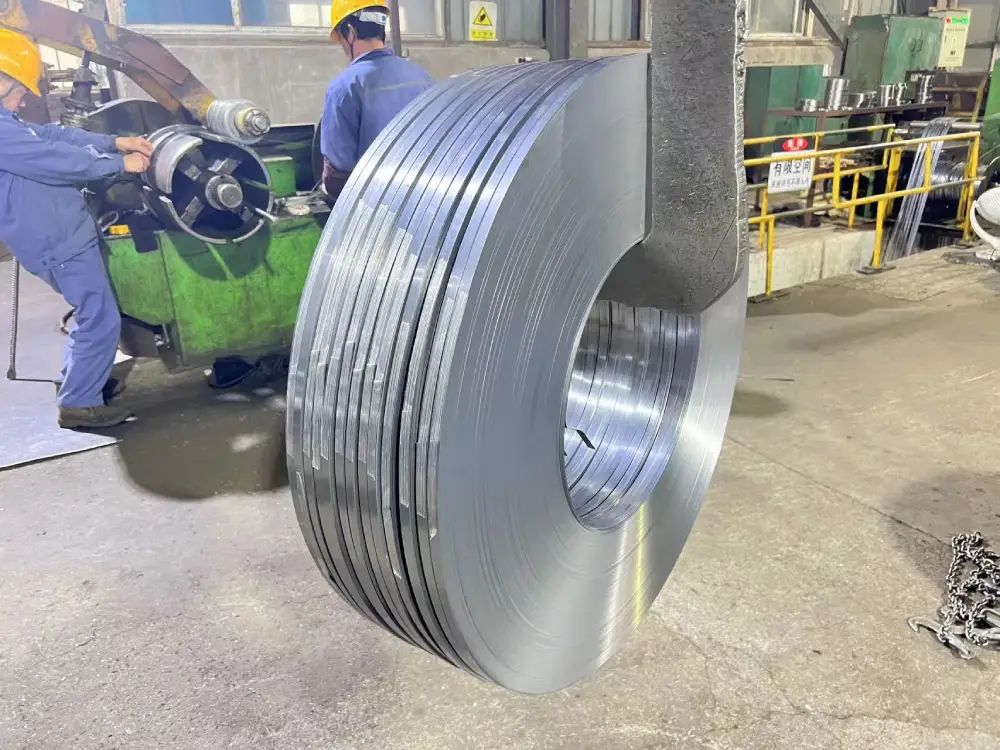
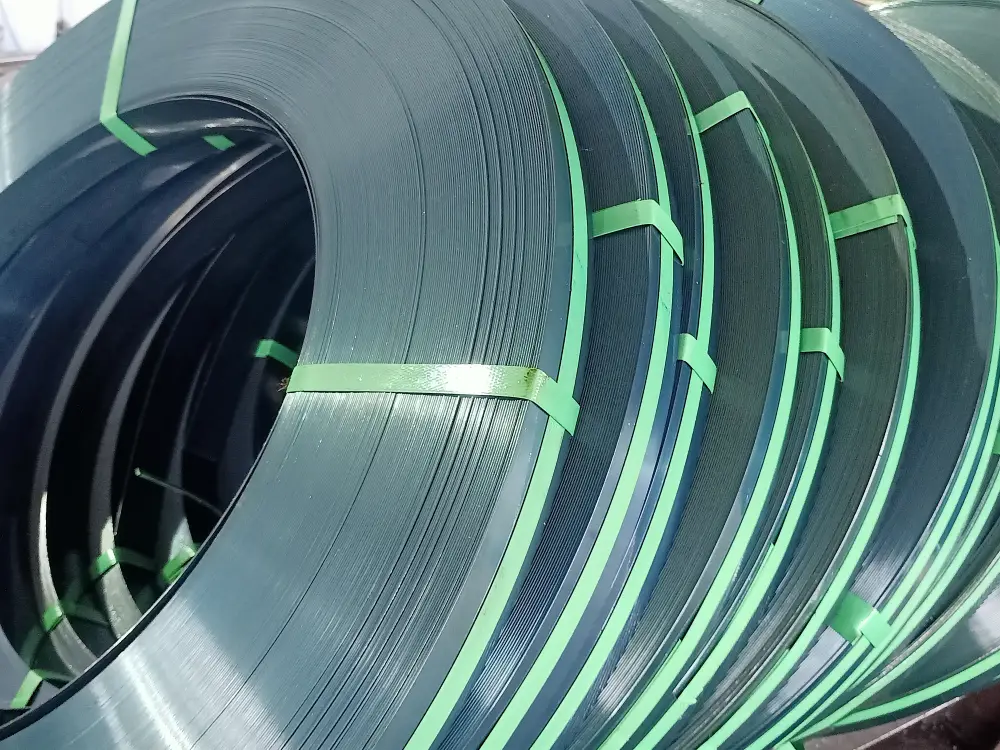
In the field of industrial manufacturing, cold rolled steel strips et heat-treated steel strips are two common and important types of steel materials. Each has unique production processes and performance characteristics, making them suitable for different application scenarios. This article will explore the key differences between the two and their typical applications in practice.
Characteristics and Applications of Cold Rolled Steel Strips
Cold rolled steel strips are manufactured through a cold rolling process. This process compresses hot rolled steel strips further at room temperature, resulting in thinner, smoother, and more precise dimensions.
Key Characteristics:
- High Surface Finish: Cold rolled steel strips often have a bright or mirror-like finish, making them ideal for products with high aesthetic requirements.
- High Dimensional Accuracy: The cold rolling process allows for precise control, achieving strict tolerance standards in thickness and width.
- Higher Strength and Hardness: The cold rolling process densifies the grain structure, improving mechanical properties.
Typical Applications:
- Industrie automobile: Used for body panels and automotive parts requiring high surface quality and precision.
- Appliance Manufacturing: For outer shells and internal components of washing machines, refrigerators, etc.
- Construction Field: Used for decorative materials and structural components.
- Tool Manufacturing: Suitable for blades, tools, and springs.
Characteristics and Applications of Heat Treated Steel Strips
Heat-treated steel strips are produced through heating and cooling processes such as quenching and tempering. These processes significantly enhance the mechanical properties of the steel strips, including hardness, dureté, and fatigue resistance.
Key Characteristics:
- Adjustable Hardness: The hardness can be controlled within a specific range by adjusting heat treatment parameters.
- High Toughness: The heat treatment improves impact resistance and durability.
- Suitable for High-Strength Applications: Heat-treated steel strips are commonly used in scenarios requiring high strength and elasticity.
Typical Applications:
- Mechanical Manufacturing: For making high-strength mechanical parts such as gears and bearings.
- Tool Industry: Used for high-hardness blades, saw blades, and scrapers.
- Fabrication de ressorts: Widely used in automotive suspension systems and industrial equipment.
- Rolling Door Springs: Ideal for rolling door springs that require high flexibility and durability.
Key Differences Between Cold Rolled and Heat Treated Steel Strips
- Production Process:
- Cold Rolled Steel Strips: Manufactured through mechanical cold rolling without heating.
- Heat Treated Steel Strips: Produced through high-temperature heating and cooling processes.
- Mechanical Properties:
- Cold Rolled Steel Strips: Higher strength and hardness but relatively lower toughness.
- Heat Treated Steel Strips: Adjustable hardness and higher toughness for high-strength applications.
- Surface Quality:
- Cold Rolled Steel Strips: Smooth surface free of oxide scales.
- Heat Treated Steel Strips: May have slight oxidation but can be improved through post-treatment.
- Typical Uses:
- Cold Rolled Steel Strips: Suitable for products requiring high surface quality and dimensional accuracy.
- Heat Treated Steel Strips: Suitable for components requiring high hardness and toughness.
How to Choose the Right Steel Strip?
The choice between cold rolled steel strips and heat-treated steel strips depends on specific application needs:
- If you need materials with high precision and a smooth finish, such as for household appliances or automotive shells, cold rolled steel strips are ideal.
- For projects requiring high strength and durability, such as springs or tools, heat-treated steel strips are more suitable.
Conclusion
Cold rolled steel strips and heat-treated steel strips each hold an irreplaceable position in industrial production. Understanding their differences and applications helps select the most suitable material, improving product quality and production efficiency. If you have related needs or questions, feel free to contact Guangzhou Jiaxiao Material Technology Co., Ltée. We are dedicated to providing professional steel strip solutions.