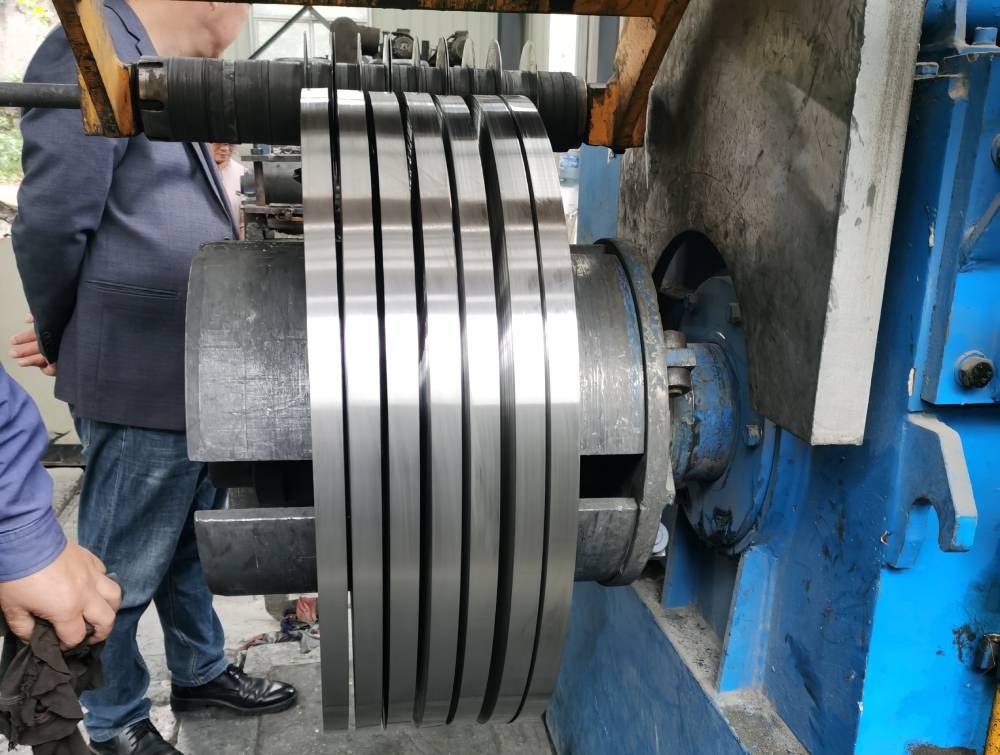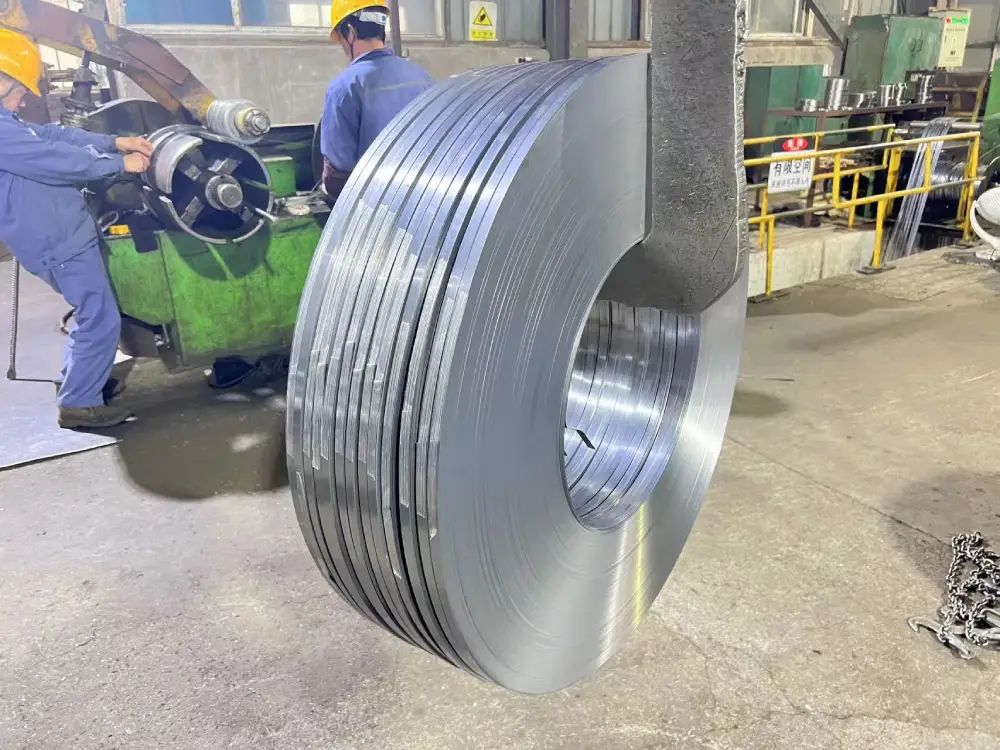

Trong sản xuất thép dải - đặc biệt là thép có hàm lượng carbon cao như C75S, SK5, 65Mn, and alloy grades—spheroidizing annealing is one of the most important heat-treatment processes. It is widely used before cold forming, dập, bending, or deep drawing, because it significantly improves the material’s ductility and workability.
But why does spheroidizing annealing make steel strip easier to bend?
To understand this, we must look at what happens inside the metal at the microscopic level.
1. What Is Spheroidizing Annealing?
Spheroidizing annealing is a heat treatment that transforms the internal carbide structure of steel. During the process, the steel is heated to a temperature just below the critical point and held for several hours, then cooled slowly.
The objective is simple:
? Turn lamellar (plate-like) carbides into fine, rounded “spheroidized” carbides.
This transformation dramatically changes how the steel behaves during forming and bending.
2. Why Lamellar Pearlite Is Hard to Bend
Before spheroidization, high-carbon steel typically contains lamellar pearlite, which has:
- Long, plate-shaped carbides
- High hardness
- High internal stress
- Poor plasticity
These long carbide plates act like tiny “rigid needles” inside the steel.
When bending or forming the strip:
- They resist deformation
- They easily initiate micro-cracks
- They cause poor bendability and tool wear
This is why untreated high-carbon steel is relatively brittle Và difficult to cold form.
3. What Happens During Spheroidizing Annealing?
Spheroidizing annealing restructures the steel’s microstructure:
Before: Lamellar pearlite (layered carbides)
After: Fine, rounded spheroidized carbides evenly distributed in ferrite
This change reduces internal resistance during deformation.
Key effects of spheroidization:
- Carbides become smaller and rounder, reducing stress concentration
- The steel’s matrix becomes softer
- Dislocation movement becomes easier
- The steel gains higher ductility Và lower hardness
In short, the steel becomes significantly more workable.
4. Why Spheroidized Steel Strip Bends More Easily
There are four major reasons:
① Reduced Hardness
Spheroidizing annealing lowers hardness dramatically—from around 220–260 HV to 150–200 HV (depending on grade).
Lower hardness means:
- Easier bending
- Less cracking
- Lower forming force
② Improved Ductility
The rounded carbides allow the metal to stretch uniformly during bending instead of tearing along sharp carbide edges.
③ Lower Internal Stress
The heat treatment relieves residual stress from rolling, preventing sudden fracture when the strip is bent.
④ Better Microstructural Stability
The uniform distribution of carbides ensures smoother deformation and consistent bend performance across the entire coil.
Result:
The steel strip becomes soft, clean, stable, and ideal for cold forming, especially for precision components.
5. Industrial Applications that Require Spheroidized Steel Strip
Many industries depend on spheroidized annealed material because of its outstanding formability:
- Springs (after secondary hardening)
- Hardware parts
- Automotive connectors and clips
- Saw blade body material
- Knife blanks
- Electronic parts
- Construction fasteners
These products require forming first before being hardened later—making spheroidizing annealing essential.
6. Why Manufacturers Choose Spheroidized Steel from Jiaxiao MTC
Tại Jiaxiao MTC (Cgoodsteel), we produce spheroidized annealed steel strip with:
✔ Uniform hardness range
✔ Clean and consistent microstructure
✔ Excellent bendability
✔ Smooth edges and superior surface finish
✔ Stable performance for stamping, punching, and forming
We supply high-carbon, alloy, and stainless steel strips in controlled annealed conditions, ensuring easy bending with minimum cracking.