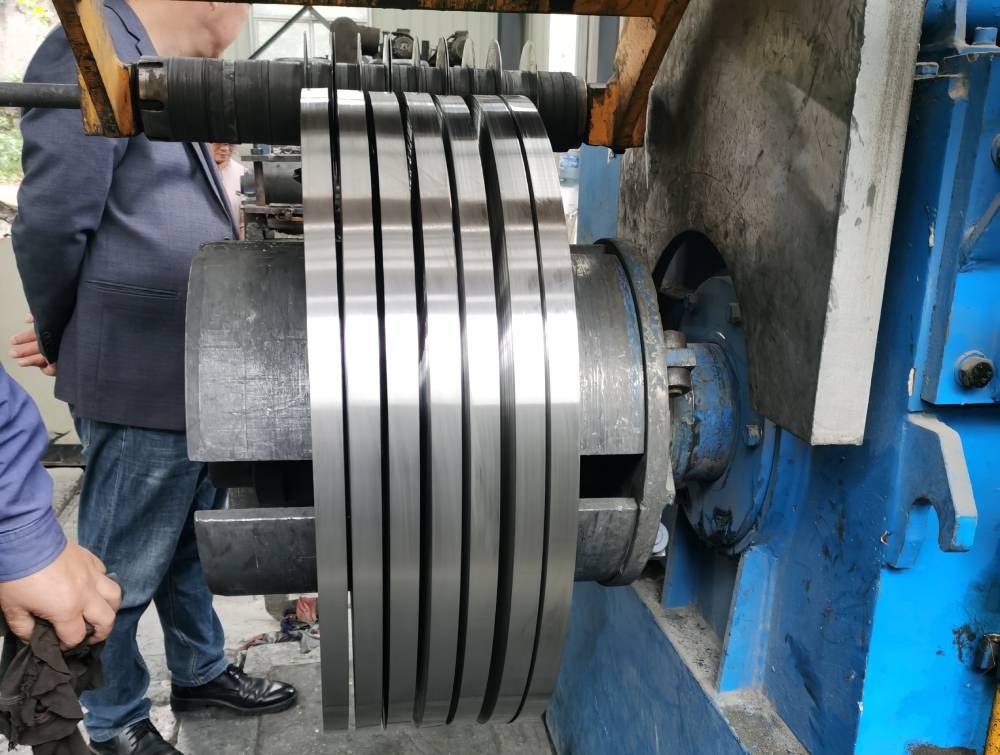
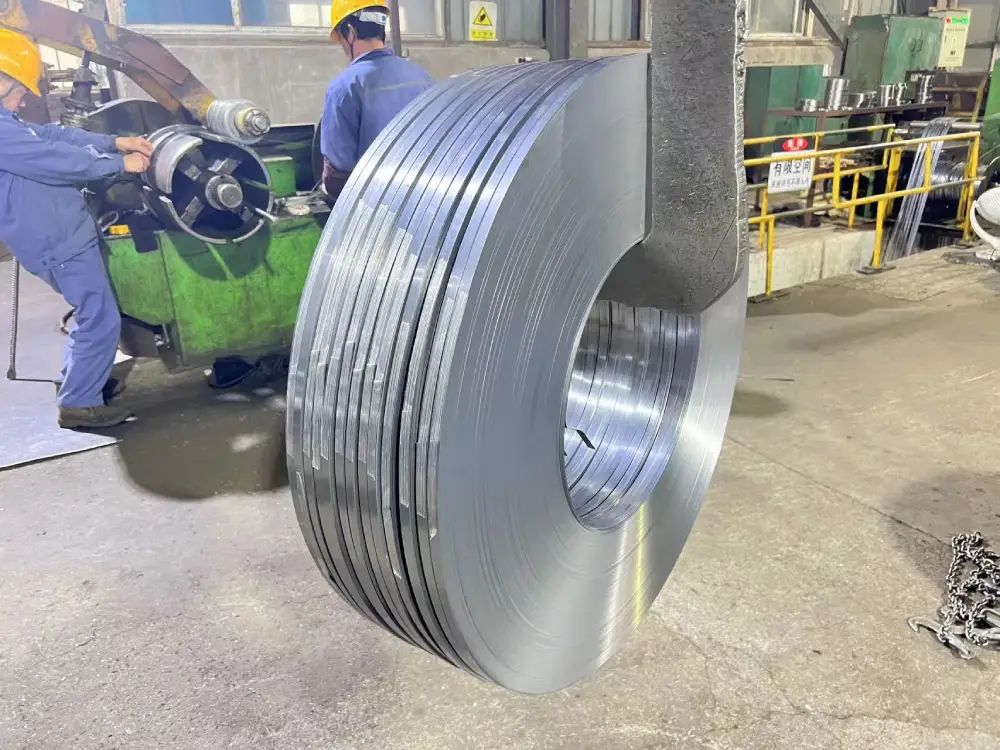
Bright-annealed steel strip is widely used in industries that demand high surface quality — such as precision parts, springs, electronics, stainless steel components, and decorative metal applications. One of its most striking features is its mirror-like, highly reflective surface. But what exactly makes bright-annealed steel strips so shiny?
In this blog, we explain the science behind bright annealing, how the process transforms the steel’s surface, and why this treatment is essential for achieving exceptional brightness and corrosion resistance.
What Is Bright Annealing?
Bright annealing is a specialized heat treatment process performed in a highly controlled protective atmosphere, usually:
- Pure hydrogen
- Hydrogen–nitrogen mixtures
- Vacuum or inert gas environment
Unlike traditional annealing in air, bright annealing prevents oxidation and scale formation, allowing the steel strip to remain clean, smooth, and shiny throughout the process.
Why the Surface of Bright-Annealed Steel Strip Is So Shiny
1. No Oxygen = No Oxidation
In normal annealing, steel is heated in air. At high temperatures, oxygen reacts with the steel surface, producing:
- Oxide scale
- Discoloration
- Rough textures
In bright annealing, the furnace atmosphere is oxygen-free. Without oxygen:
- The steel surface cannot oxidize
- No scale forms
- The surface remains as smooth as it was after cold rolling
This is the primary reason for the mirror-like brightness.
2. Hydrogen Atmosphere Cleans the Surface
Hydrogen is a strong reducing gas. During bright annealing:
- Hydrogen reacts with any tiny oxide molecules
- Oxides are removed as vapor, leaving the steel clean
- A chemically “reduced” surface appears bright and pure
This natural surface cleaning effect is one of the secrets behind the glossy finish.
3. Highly Polished Furnace Interior Reflects Light
Bright annealing is performed in stainless steel or nickel-alloy furnace tubes with reflective surfaces. As the steel strip passes through the tube:
- Light reflects repeatedly
- The surface becomes visually smoother
- The strip exits with a clean, bright metallic sheen
The furnace environment helps intensify the mirror effect.
4. Precise Temperature Control Preserves Surface Smoothness
Bright annealing typically occurs at:
- 750°C – 950°C for carbon and alloy steel strips
- 1000°C – 1150°C for stainless steels
With automated control:
- The strip heats evenly
- Surface deformation is kept minimal
- No uneven grain growth occurs
Smooth microstructure = visually bright surface.
5. No Post-Treatment Grinding or Polishing Needed
Because the surface is already bright:
- No acid pickling
- No mechanical polishing
- No grinding or buffing
This avoids micro-scratches and preserves the natural gloss.
Bright annealed steel strips often appear mirror-like straight from the furnace, reducing production steps and ensuring stable surface quality.
Advantages of Bright-Annealed Steel Strip
1. Mirror-Like Surface Finish
The biggest advantage — a clean, bright, reflective surface.
2. Superior Corrosion Resistance
The protective atmosphere preserves chromium in stainless steels and prevents decarburization in carbon steels.
3. Excellent Formability
Bright annealing softens the steel while keeping the surface smooth, ideal for:
- Deep drawing
- Precision stamping
- Bending
- Forming
4. Ideal for High-Precision Applications
Industries requiring flawless surfaces often specify bright-annealed materials, including:
- Electronics
- Springs
- Medical instruments
- Automotive shims
- Measuring tools
- Decorative parts
How Bright-Annealed Steel Differs from Regular Annealed Steel
| Feature | Regular Annealing | Bright Annealing |
|---|---|---|
| Atmosphere | Air | Hydrogen / inert gas |
| Surface | Oxidized, dull, may require pickling | Mirror-like, clean, non-oxidized |
| Oxide Scale | Yes | None |
| Corrosion Resistance | Lower | Higher |
| Applications | General | Precision, high-end |
Conclusion
Bright-annealed steel strips appear shiny because the entire annealing process occurs in a protective, oxygen-free atmosphere, preventing oxidation and maintaining the smoothness of the cold-rolled surface. Combined with hydrogen reduction, precise temperature control, and clean furnace design, the result is a beautiful, reflective, and corrosion-resistant surface ideal for demanding industrial applications.
Manufacturers such as Jiaxiao MTC use advanced continuous bright-annealing furnaces to ensure consistent brightness, excellent mechanical performance, and stable surface quality for global customers.