As the world embraces a future driven by energy efficiency and sustainability, high-performance electric motors have emerged as critical components in various industries. These motors power everything from electric vehicles (EVs) to industrial machinery, and their efficiency directly impacts energy consumption and operational costs. At the heart of these high-efficiency motors lies silicon steel, a material that has revolutionized the way we design and manufacture electrical machinery.
This blog explores how silicon steel contributes to the efficiency, reliability, and sustainability of electric motors, its unique properties, and its evolving role in the global energy transition.
What is Silicon Steel and Why is it Essential?
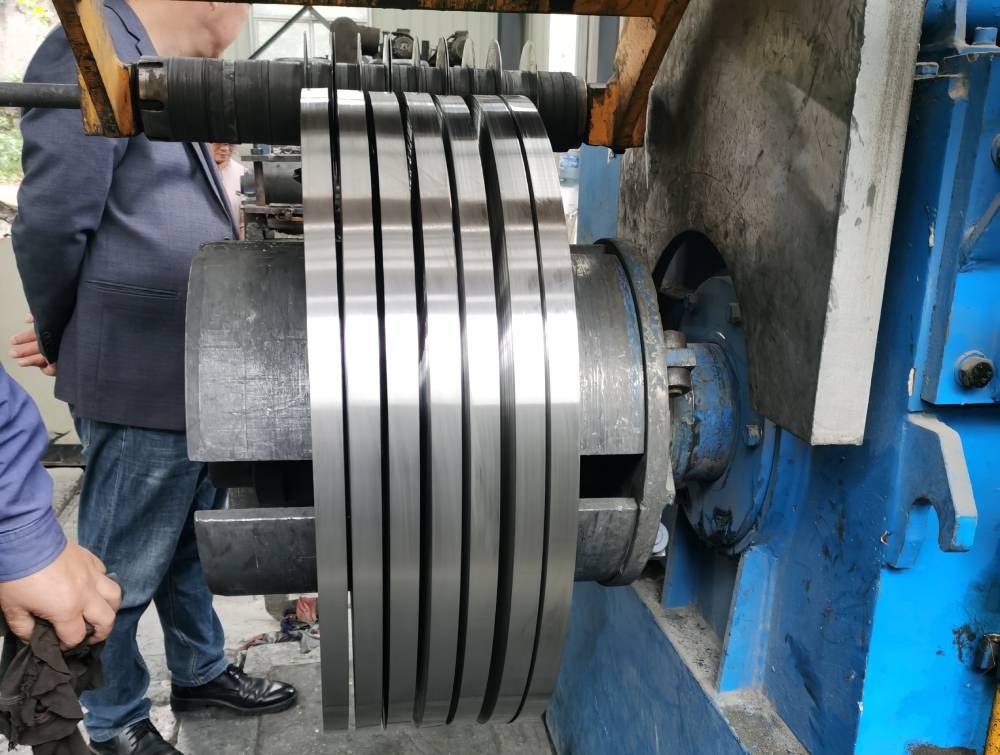
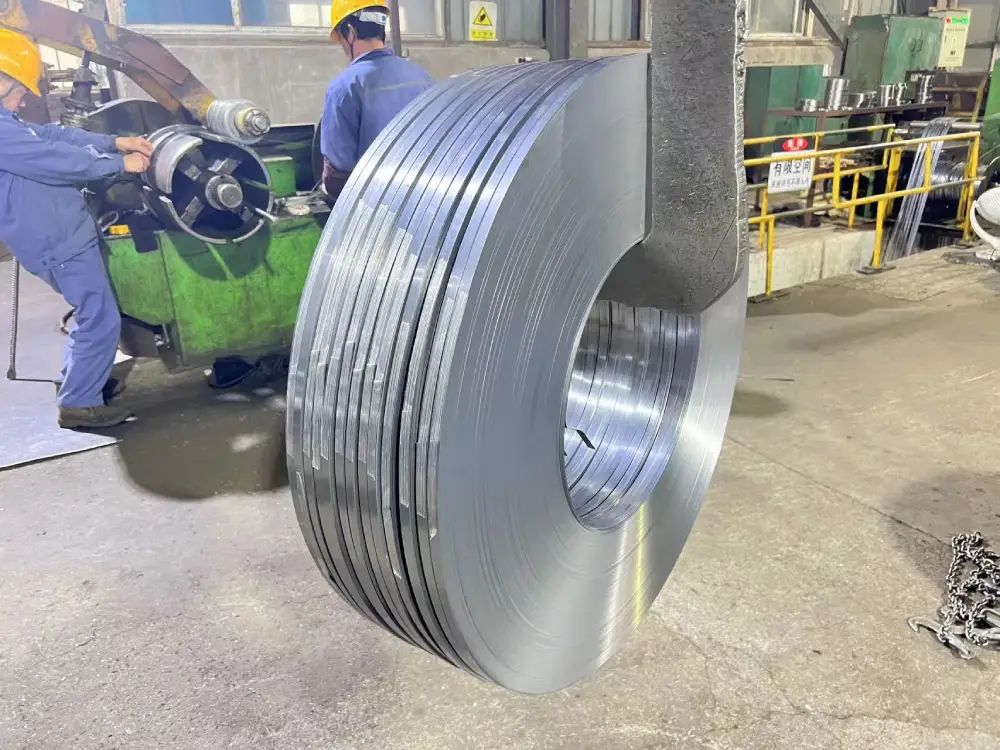
Silicon steel, often referred to as electrical steel or transformer steel, is an iron-silicon alloy specifically engineered for electromagnetic applications. Its defining characteristic is its ability to efficiently conduct magnetic flux while minimizing energy loss. This makes it an indispensable material for the cores of electric motors, Máy biến áp, và máy phát điện.
Key Properties of Silicon Steel
- Low Core Losses
Core loss, which includes hysteresis and eddy current losses, is a major factor in motor inefficiency. Silicon steel minimizes these losses through its high electrical resistivity and tailored grain orientation. - High Magnetic Permeability
The material’s ability to allow magnetic fields to flow through it with minimal opposition enhances the motor’s overall performance. - Mechanical Strength and Durability
Silicon steel offers the robustness needed to withstand the mechanical stresses of high-speed motor operation, ensuring long-term reliability.
How Silicon Steel Elevates High-Efficiency Motor Performance
1. Enhancing Energy Conversion Efficiency
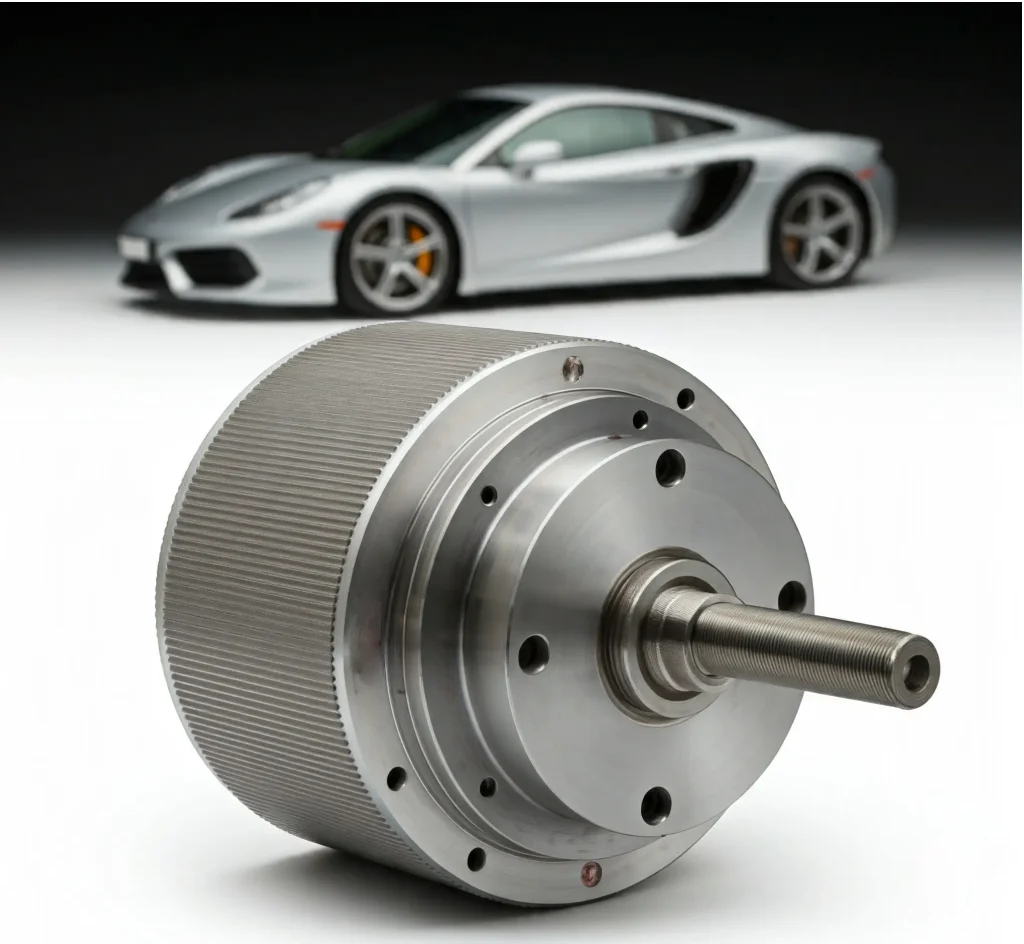
Electric motors rely on the magnetic field created by the rotor and stator for energy conversion. By using silicon steel in the core, manufacturers can significantly reduce magnetic flux leakage and energy dissipation, ensuring that more of the electrical energy is converted into mechanical energy.
Case Study: Electric Vehicles
In EV motors, reducing energy loss is critical for extending battery range. Premium grades of non-oriented silicon steel help achieve ultra-low core loss, contributing to higher efficiency and lower heat generation.
2. Supporting Compact and Lightweight Designs
High-performance motors are increasingly designed to be smaller and lighter without compromising on power. Silicon steel, with its superior magnetic properties, enables manufacturers to achieve higher power densities. This is particularly beneficial in applications like drones, robotics, and portable tools.
3. Facilitating High-Speed Operation
Modern motors, especially in industrial automation and EVs, operate at higher speeds to meet performance demands. Silicon steel’s high strength and low loss properties ensure that these motors can run efficiently and reliably under such conditions.
Types of Silicon Steel in Electric Motors
1. Non-Oriented Electrical Steel (Noes)
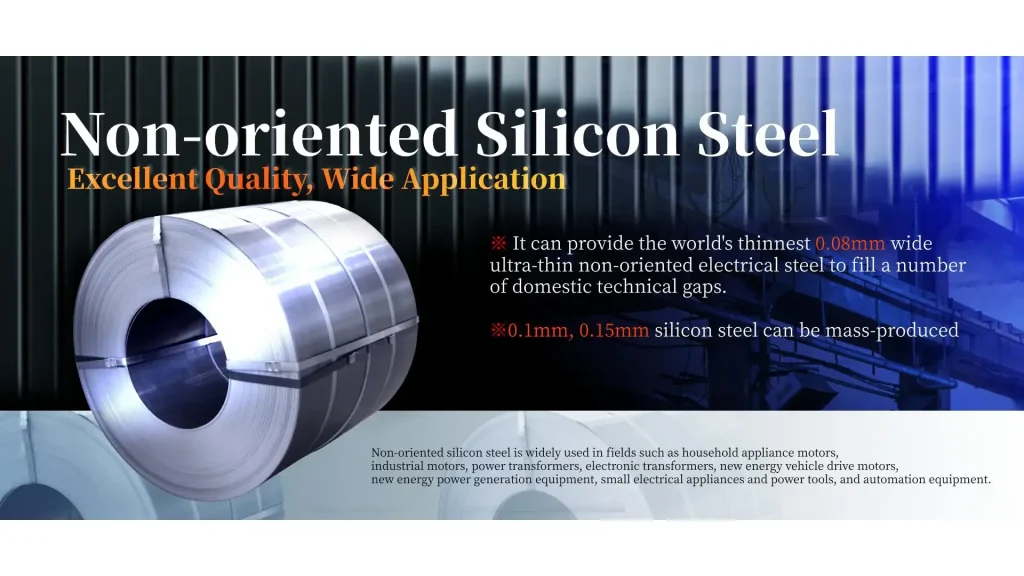
Thép silicon không định hướng is widely used in rotating machinery like motors and generators. Its uniform magnetic properties in all directions make it ideal for applications where the magnetic flux rotates, such as in the stators and rotors of high-efficiency motors.
2. Grain-Oriented Electrical Steel (GOES)
While primarily used in transformers, grain-oriented silicon steel finds limited applications in specialized motors where the magnetic field flows predominantly in one direction. Its unparalleled efficiency in managing magnetic flux makes it valuable in these niche applications.
Technological Advancements in Silicon Steel
1. Ultra-Thin Laminations
Advancements in manufacturing have enabled the production of ultra-thin silicon steel sheets, reducing eddy current losses. These thin laminations are especially significant in EV motors and renewable energy applications.
2. Improved Coatings
Modern silicon steel is often coated with insulating layers to further reduce losses. Innovations in coating materials enhance the efficiency and durability of high-performance motors.
3. Enhanced Alloy Compositions
Manufacturers are experimenting with optimized silicon and carbon content to achieve a balance between magnetic performance and mechanical strength.
Silicon Steel in the Context of Energy Transition
As countries strive to meet ambitious carbon neutrality goals, silicon steel is playing a pivotal role in enabling technologies that reduce energy consumption.
1. Electric Vehicles
The EV market is heavily reliant on high-efficiency motors to maximize battery utilization. Advanced silicon steel grades ensure that these motors operate with minimal energy wastage, directly contributing to longer ranges and lower environmental impact.
2. Renewable Energy Systems
In wind turbines and hydroelectric generators, silicon steel enables high efficiency by reducing magnetic losses. This ensures that more of the captured energy is converted into usable electricity.
3. Industrial Automation
The transition to smarter factories powered by efficient motors relies on materials like silicon steel to meet the dual demands of productivity and sustainability.
Challenges and Future Directions
1. Cost Constraints
High-grade silicon steel, especially with advanced coatings or ultra-thin laminations, comes at a premium cost. Balancing performance with affordability remains a challenge for manufacturers.
2. Technological Barriers
Producing high-quality silicon steel involves precision in both alloy composition and processing. Further innovation is needed to overcome these technical hurdles while maintaining scalability.
3. Recycling and Sustainability
As the demand for silicon steel grows, developing efficient recycling methods will be critical to minimizing the environmental footprint of its production and use.
Phần kết luận
Silicon steel is far more than a functional material in electric motors; it is a cornerstone of the energy-efficient future. By enabling the development of high-performance motors, this remarkable alloy contributes to reduced energy consumption, lower operational costs, and a sustainable energy landscape.
As industries continue to innovate, silicon steel will undoubtedly remain at the forefront, driving advancements in electric vehicles, renewable energy, and industrial machinery. For engineers and manufacturers, the challenge lies in leveraging this material to its fullest potential, ensuring that the motors of tomorrow are not only powerful but also environmentally responsible.
Gọi hành động: Whether you’re designing the next-generation electric motor or exploring materials for cutting-edge renewable energy solutions, silicon steel offers unmatched benefits. Partner with trusted suppliers to access the latest innovations in this transformative material.