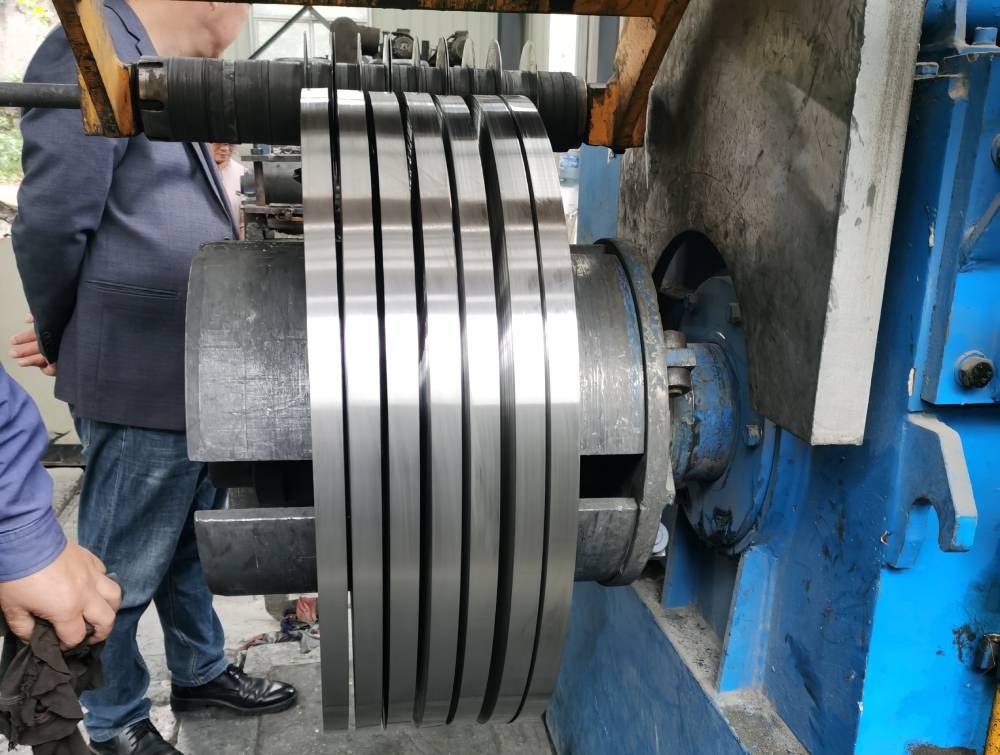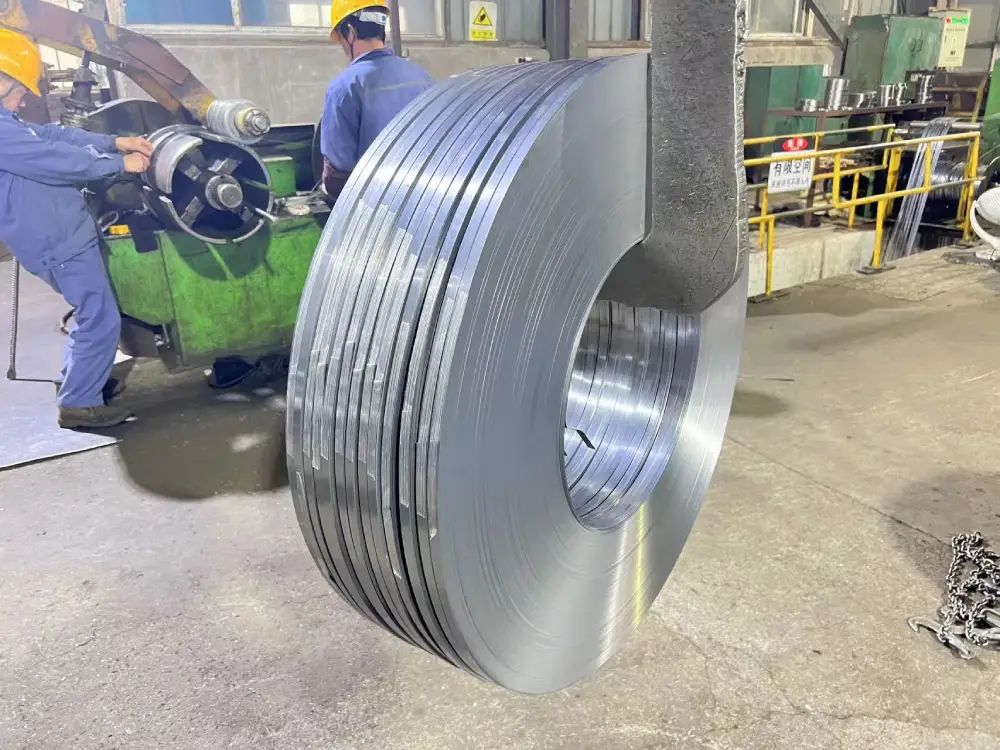
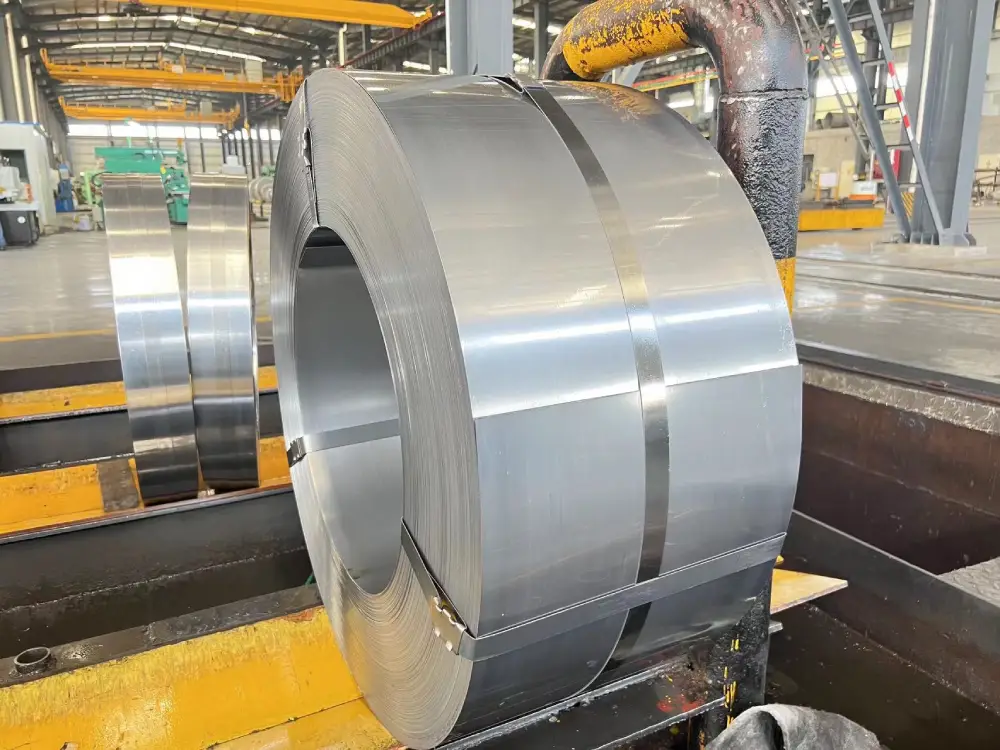
In the world of materials science and manufacturing, tempering and hardening steel play a crucial role in enhancing the properties of steel, making it suitable for a wide range of applications. This article will take you through the processes, преимущества, and applications of tempering and hardening steel.
The Basics of Tempering and Hardening
Tempering and hardening is a thermal process that significantly strengthens steel strips. The hardening process involves heating the steel strip to above the critical transformation temperature for its specific grade and then rapidly cooling it. This rapid cooling makes the steel extremely brittle in this state, which is why further treatment in the tempering stage is necessary. During tempering, the strips are reheated to a lower temperature and held at that temperature for a specific period. This entire process is typically carried out in an inert atmosphere to prevent oxidation. Through this carefully controlled heating and cooling cycle, the steel strip acquires a high degree of toughness and excellent spring properties, making it a highly desirable material for many industries.
Production Specifications and Tolerances
Steel strips produced through tempering and hardening can have a thickness ranging from 0.1mm to 5.00mm and a width from 2mm to 500mm. The surface finish can be natural, синий, желтый, белый, или полированный, and the edges can be slit, округлый, или квадрат. Manufacturers like Guangzhou Jiaxiao Material Technology Co., Ltd.adhere to strict thickness and width tolerances. Например, for thicknesses less than 0.25mm, the standard tolerance is +/-0.015mm. As the thickness increases, the tolerance ranges vary, with different levels of precision depending on the specific thickness and width intervals. Кроме того, special tolerances can be customized according to customer requirements, ensuring that the final product meets the exact needs of various applications.
Material Grades and Their Characteristics
There are several material grades commonly used in tempering and hardening steel. Например, СК50 has a carbon content ranging from 0.46 – 0.54%, along with specific amounts of manganese, phosphorus, sulfur, кремний, и т. д.. Each grade has its unique chemical composition, which directly influences the mechanical properties of the steel after tempering and hardening. 50КрВ4 is another important grade, often used in applications where high strength and good spring characteristics are required. Understanding these material grades and their corresponding properties is essential for selecting the right steel for specific applications, whether it’s for automotive components, construction tools, or other industries.
Применение в различных отраслях промышленности
Tempering and hardening steel strips find extensive use in numerous industries. In the construction tool sector, they are used in bricklayer trowels, plaster trowels, шпатели, and scrapers. These tools need to be durable and able to withstand the rigors of daily use, and the hardened and tempered steel provides the necessary strength and wear resistance. In the saw blade industry, ленточные пилы, hack saw blades, дисковые пилы, and gang saw blades all benefit from the enhanced properties of this type of steel. It allows for sharper cutting edges and longer blade life. In the automotive field, components such as clutch discs/washer, Щетки стеклоочистителя, and seat belt springs rely on the high-quality performance of tempered and hardened steel to ensure safety and reliability. Shoe accessories like shoe insoles, shanks, toe caps, and various springs also utilize this steel to provide support and flexibility.
Quality Control and Testing
To ensure the quality of the tempered and hardened steel, strict inspection procedures are in place. Manufacturers use laboratory equipment to test the material composition, размер, твердость, предел прочности, and flatness of the steel strips. Material strength testing, metallurgical structure inspection, sample strength testing, chemical composition analysis, hardness testing (using methods like Rockwell, Brinell, and Vivtorinox), and flatness testing are all integral parts of the quality control process. By meticulously monitoring these parameters, manufacturers can guarantee that the final product meets the highest industry standards and customer expectations.
В заключение, tempering and hardening steel is a vital process that unlocks the potential of steel, making it an indispensable material in modern manufacturing. We can enhance steel’s strength, прочность, and durability through tempering and hardening it, which has led to its wide use in many industries. Более того, continuous research and innovation in this field are expected to further expand its applications and enhance its performance.