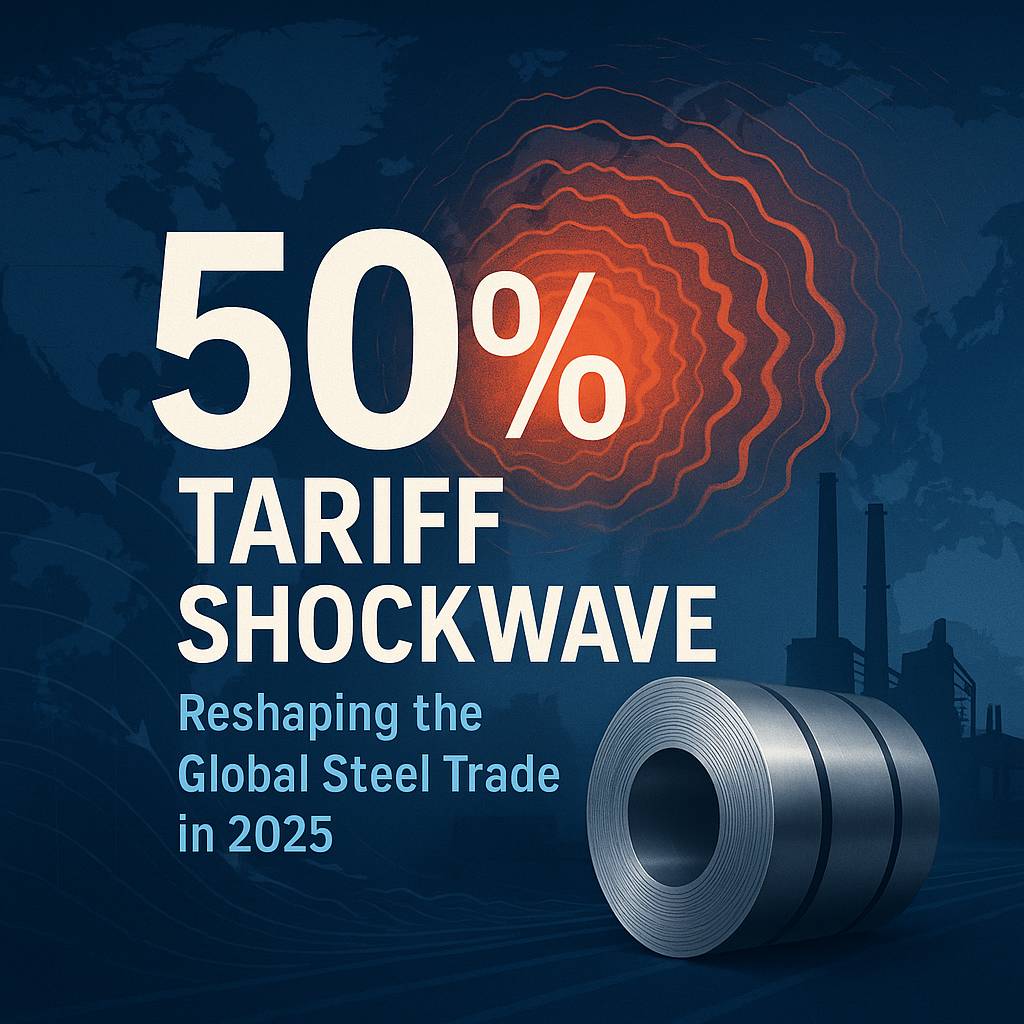
В 2025, the global steel industry is being rocked by an unprecedented 50% tariff on steel imports. This policy, implemented by major economies to protect domestic producers, is sending shockwaves through international trade. The effects reach far beyond steel mills—impacting raw material markets, manufacturers, and even end consumers.
Raw Material Price Volatility
The immediate consequence of a steep tariff is raw material price instability. Steel production depends heavily on iron ore, coking coal, and alloying elements such as nickel and chromium. With tariffs disrupting trade flows:
- Import-dependent nations face rising costs of raw inputs.
- Producers with local resources gain short-term advantages.
- Global commodity markets become more volatile, with frequent price swings.
This volatility forces steelmakers to revise procurement strategies and hedge more aggressively against risks.
Transmission of Costs to Consumers
Tariffs don’t stop at the mill gate—they ripple through the supply chain. When steel becomes more expensive, the impact spreads to:
- Automotive manufacturers – higher costs for body panels, шасси, and components.
- Construction sector – rising expenses for structural steel and reinforcing bars.
- Consumer goods – price hikes in appliances, техника, и упаковка.
В конечном счете, consumers bear the cost through more expensive cars, homes, and everyday products. Inflationary pressures may intensify in markets where steel is a critical input.
Winners and Losers in the New Trade Landscape
The 50% tariff is creating clear divides:
- Winners: Domestic steel producers shielded by tariffs, especially in resource-rich countries.
- Losers: Import-reliant manufacturers who face higher costs and reduced competitiveness.
For global traders, this shift demands new supply chain strategies, regional diversification, and stronger local partnerships.
Strategic Outlook for 2025
To adapt to this new reality, businesses must:
- Diversify sourcing to reduce dependency on high-tariff regions.
- Strengthen regional supply chains for resilience.
- Invest in recycling and circular steel models to mitigate raw material costs.
- Pass costs strategically to customers without eroding demand.
The 50% tariff may protect domestic industries, but it also accelerates the fragmentation of global trade.
Заключение
The tariff shockwave of 2025 is more than a trade dispute—it’s a restructuring of the global steel industry. Raw material volatility and consumer cost transmission are reshaping supply chains and competitiveness worldwide.
For businesses, the challenge is clear: adapt to a fragmented market, or risk being left behind.