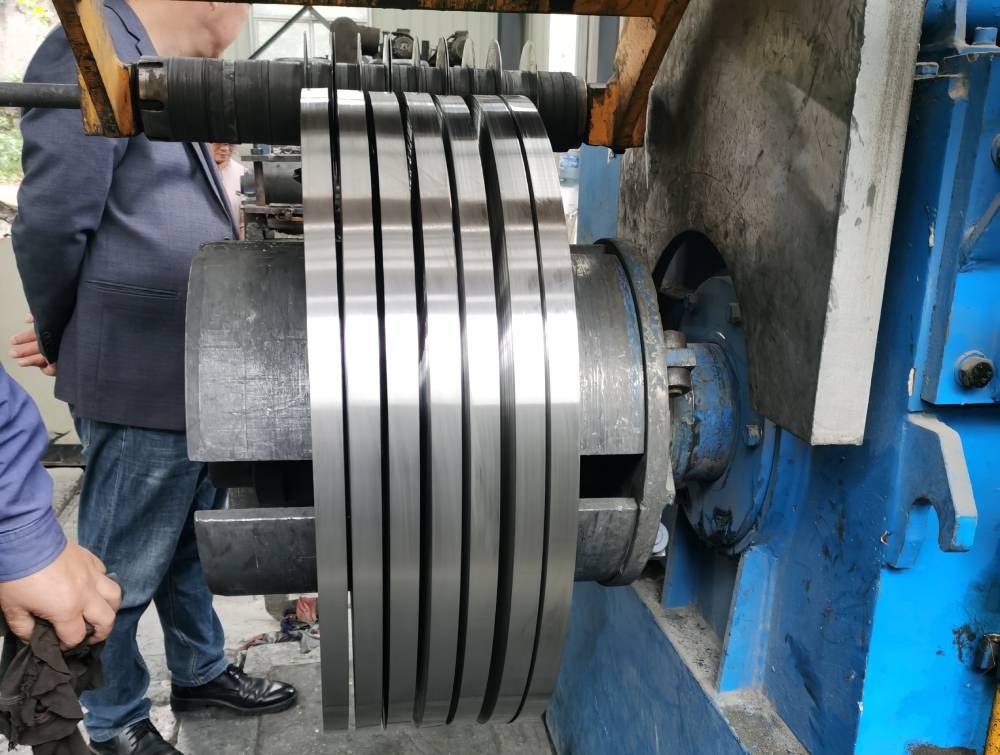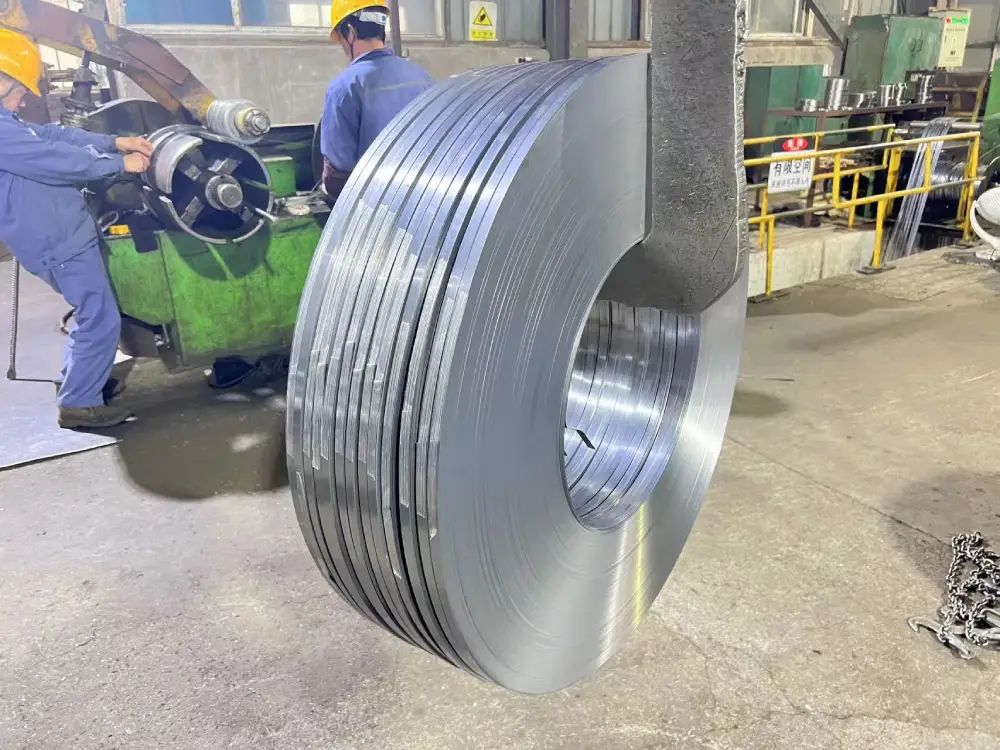
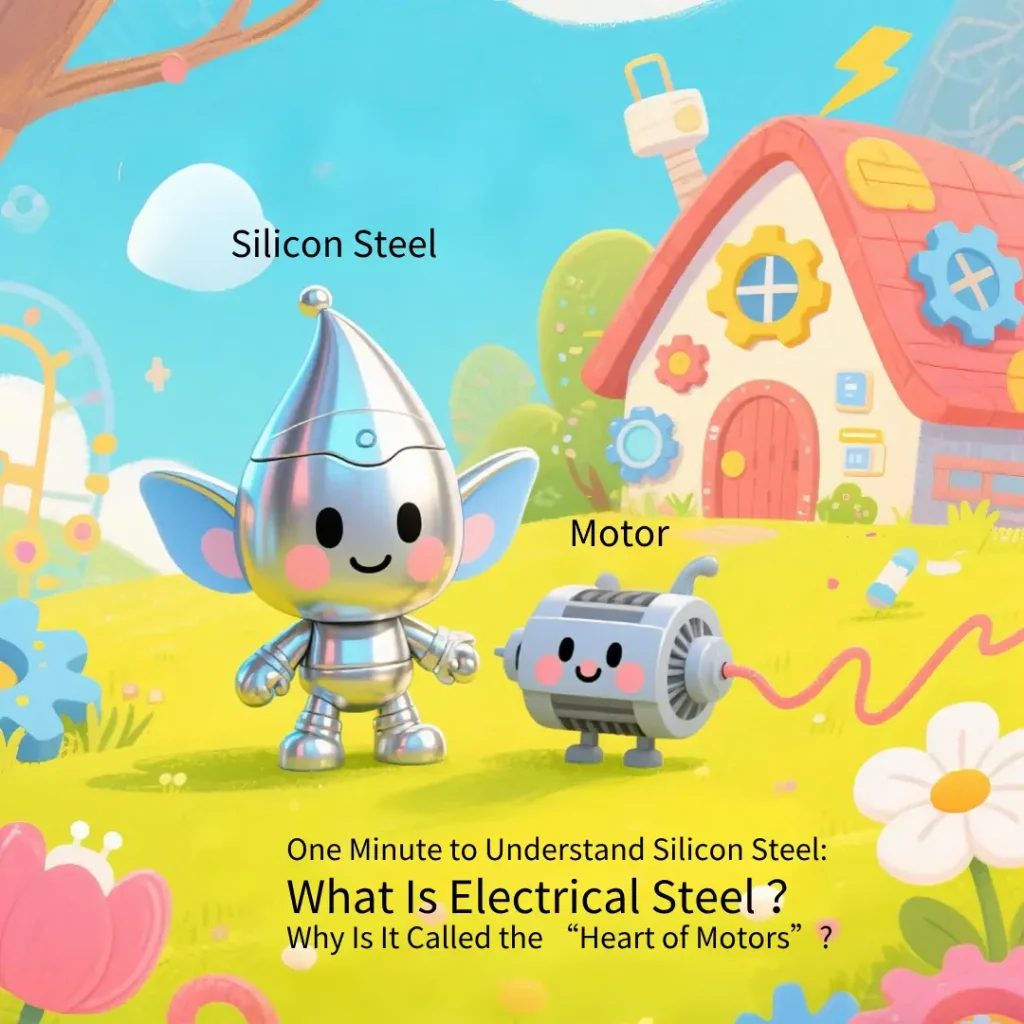
Electrical steel, often referred to as silicon steel, is a vital material in the world of electrical and magnetic applications. It may sound complex, but it’s essential. It powers everything—from the electric motors in your appliances to the transformers that regulate electricity. In this blog, we’ll explain in simple terms what electrical steel is and why it’s called the “heart of motors.”
What Is Electrical Steel (Silicon Steel)?
Electrical steel is a type of steel that contains a small amount of silicon, which gives it magnetic properties. These properties make it highly effective in electrical equipment. It is crucial for conducting electricity and producing magnetic fields. It’s a soft magnetic alloy, which means it can easily magnetize and demagnetize without losing its magnetic properties over time.
There are two main types of electrical steel: grain-oriented et non-oriented. Non-oriented electrical steel is more commonly used in motors, transformers, et generators because it can perform equally well in any direction.
Why Is Electrical Steel Called the “Heart of Motors”?
Imagine your motor as a pump. It needs something to drive it efficiently, and that “something” is the electrical steel that forms its core. In electric motors, electrical steel is used in the stator et rotor, which are the critical parts responsible for generating and controlling the magnetic fields that power the motor.
Here’s why it’s called the “heart of motors”:
- Magnetic Efficiency: Electrical steel’s magnetic properties allow it to efficiently transfer electricity through the motor, converting electrical energy into mechanical energy with minimal loss.
- Energy Saving: Electrical steel minimizes energy loss due to its excellent magnetic permeability, making motors and transformers more energy-efficient.
- Durability: Thanks to its robust properties, electrical steel contributes to the long lifespan of motors and generators, reducing wear and tear.
Where Is Electrical Steel Used?
Electrical steel can be found in a wide variety of applications, particularly where magnetic properties are needed to generate or manage electricity. Some common uses include:
- Electric Motors: From small household fans to large industrial motors, electrical steel plays a key role in their performance.
- Transformers: Electrical steel is used in the cores of transformers, where it helps transfer electrical energy from one circuit to another.
- Generators: Electrical steel is also used in the construction of generators that produce electricity.
- Renewable Energy: In wind turbines et solar inverters, electrical steel helps ensure optimal energy conversion, playing a significant role in clean energy technologies.
Why Is Silicon Steel Important for Modern Technology?
As we transition to more energy-efficient technologies, electrical steel becomes even more important. The demand for electric vehicles (EVs), renewable energy systems, and energy-efficient devices is growing, and electrical steel is at the forefront of this shift. It helps make electric motors more efficient, reduces energy loss, and supports the global move toward sustainability.
Conclusion: A Material That Powers the Future
Electrical steel may be a small part of the big picture, but its impact is immense. As the “heart of motors”, it plays a central role in powering the technology that drives our modern world. From electric vehicles to smart appliances, electrical steel is helping us move toward a more energy-efficient and sustainable future.
Interested in learning more about electrical steel and its applications in today’s technology? Stay tuned for more insights, and feel free to contact us for more details about how electrical steel can benefit your industry.