1. Introduction
Many buyers and engineers often ask the same question:
“Is cold-rolled steel expensive?”
The short answer is yes — but for good reason.
Cold-rolled steel costs more than hot-rolled steel because of its additional processing, tighter tolerances, and higher performance.
However, when you look at the total cost of ownership — including durability, formability, and appearance — cold-rolled steel is often the smarter and more economical choice.
2. Why Cold-Rolled Steel Costs More
Cold-rolled steel undergoes multiple extra manufacturing steps beyond hot rolling.
Here’s where the added value — and cost — comes from:
| Process | Added Cost Factor | Benefit |
|---|---|---|
| Pickling | Removes surface oxide | Smooth, clean steel base |
| Cold Rolling | Reduces thickness at room temperature | Tight dimensional control |
| Recuit | Relieves internal stress | Improved ductility and consistency |
| Skin Passing | Enhances surface quality | Smooth, uniform appearance |
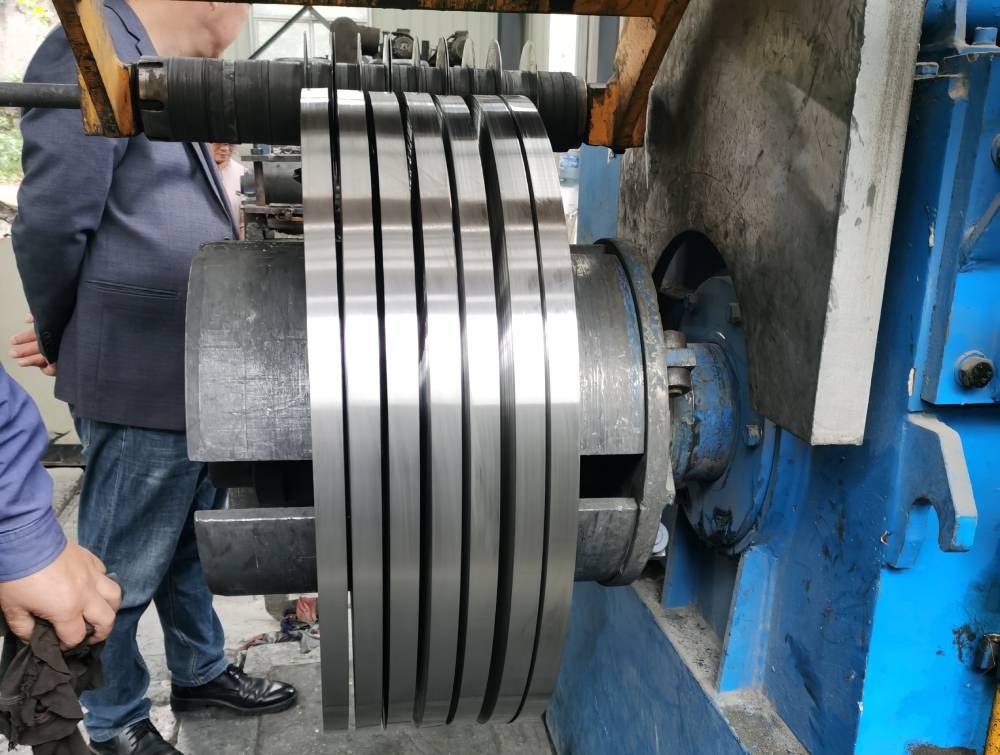
| Slitting & Polissage | Custom widths and finishes | Ready-to-use precision strips |
Each step consumes energy, labor, and time, but it also transforms ordinary steel into a premium-grade product that meets engineering precision standards.
3. Factors That Affect the Price
The price of cold-rolled steel depends on several variables:
a. Raw Material Prices
Fluctuations in iron ore and hot-rolled coil prices directly impact the base cost.
When global steel demand increases, cold-rolled prices tend to rise accordingly.
b. Steel Grade and Composition
Different grades — such as C75S, 50CrV4, AISI 420, et 301 inoxydable — have unique alloying elements and processing requirements.
For example, stainless steel (like 420) is naturally more expensive due to its chromium content and corrosion resistance.
c. Processing Precision
The tighter the thickness and flatness tolerance, the more advanced the rolling equipment and inspection required — which slightly increases cost.
Jiaxiao MTC, for example, maintains thickness tolerance within ±0.015 mm, ensuring exceptional dimensional accuracy.
d. Surface Finish
Mirror-bright, polished, or blue-tempered finishes require additional polishing and heat treatment, contributing to higher processing costs but offering better appearance and durability.
e. Order Quantity and Coil Size
Larger coil quantities typically lower the per-ton price because of economies of scale.
Custom widths, small lots, or specialized tempering may raise unit cost slightly due to setup time.
4. Why Cold-Rolled Steel Is Worth the Investment
Although cold-rolled steel may cost 10–30% more than hot-rolled steel, it delivers far greater value per unit of performance.
Key Advantages Include:
- Superior dimensional accuracy — ideal for precision parts
- Smooth, defect-free surface — excellent for coating or plating
- Higher tensile strength and hardness
- Enhanced formability and spring properties
- Consistent mechanical performance across batches
These advantages reduce material waste, machining effort, and rework, saving manufacturers significant downstream costs.
5. Jiaxiao MTC’s Approach to Cost Efficiency
At Jiaxiao MTC, we understand that global buyers seek both quality and affordability.
Our cost advantage comes from:
- In-house production lines covering pickling, laminage à froid, recuit, refendage, and tempering
- Optimized energy and yield management to reduce production waste
- Bulk raw material sourcing from trusted hot-rolled coil suppliers
- Advanced mill automation that minimizes manual adjustments and errors
- Flexible customization for each customer’s size, dureté, and finish requirements
By integrating every step internally, Jiaxiao MTC minimizes overhead costs — allowing us to provide premium cold-rolled steel at competitive export prices.
6. Comparing Cold-Rolled vs Hot-Rolled Steel (Value Overview)
| Propriété | Hot-Rolled Steel | Cold-Rolled Steel |
|---|---|---|
| Surface Finish | Rough, scaled | Smooth, polished |
| Dimensional Accuracy | Moderate | Very high |
| Strength & Hardness | Medium | Higher (work-hardened) |
| Price per ton | Lower | 10–30% higher |
| Application | Structural parts | Precision tools, ressorts, blades |
So while the initial cost is higher, the performance, reliability, and long-term efficiency of cold-rolled steel make it the better option for precision industries.
7. Applications That Justify Cold-Rolled Steel
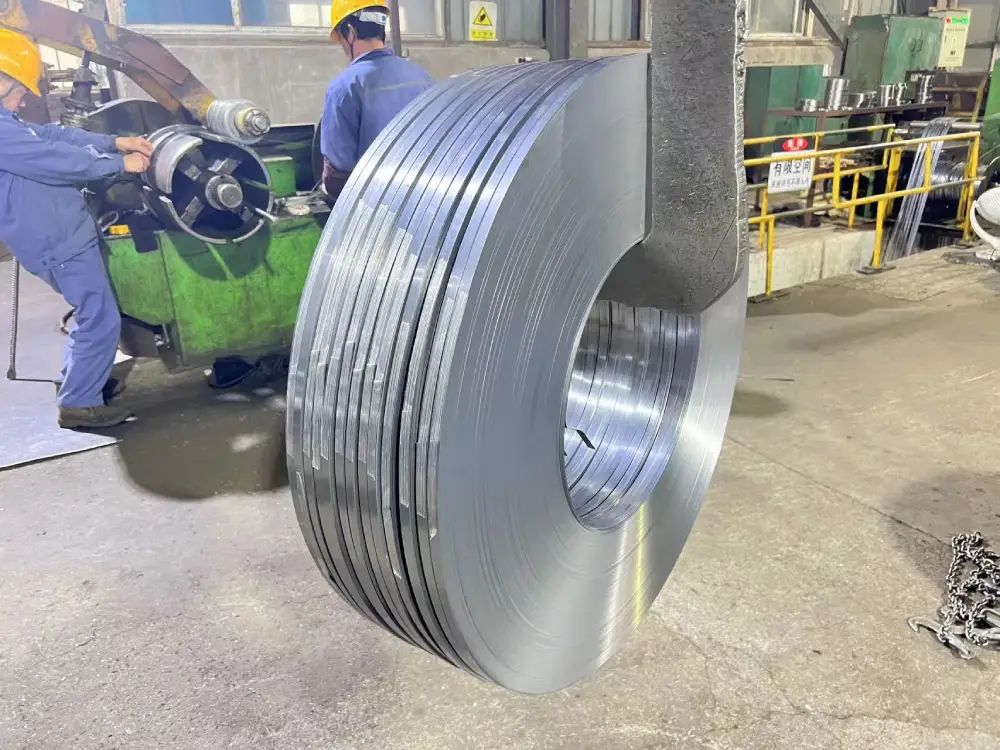
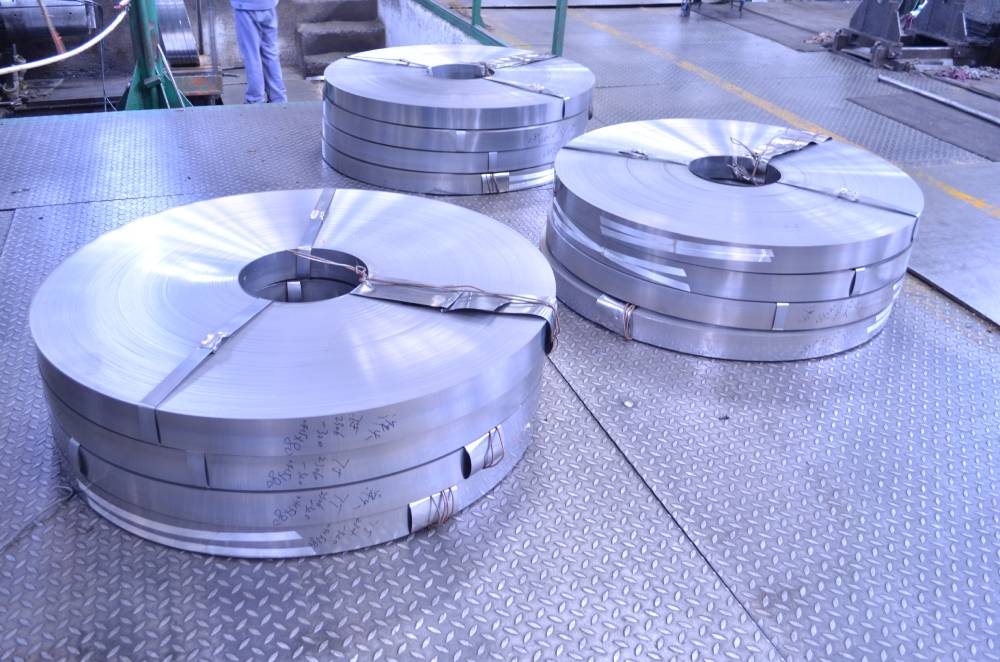
Cold-rolled coils and strips are used in:
- Spring manufacturing (C75S, SK5, 65Mn)
- Automotive components (50CrV4, 60Si2Mn)
- Industrial blades and tools (AISI 420, SK85)
- Hardware and construction parts requiring tight dimensional tolerances
Each of these applications benefits from the haute résistance, platitude, and surface integrity achieved through cold rolling.
8. Conclusion
Cold-rolled steel is not just more expensive — it’s more advanced.
Its price reflects precision engineering, controlled mechanical properties, and superior finish quality that hot-rolled steel cannot match.
When sourced from a manufacturer like Jiaxiao MTC, cold-rolled steel becomes a high-value investment that enhances product reliability, reduces waste, and delivers consistent performance in every coil.