When it comes to steel, not all strips are created equal. If you’re making springs, Lưỡi dao, công cụ, or parts that need to last under stress, choosing between high carbon steel Và stainless steel can feel like walking a tightrope. Both have strengths. Both have limits. And at the heart of it all? Xử lý nhiệt.
Let’s break it down—real talk, no fluff—so you can make the right decision for your application.
? The Real Difference: What’s Inside Matters
First, it’s all about chemistry.
- High Carbon Steel (like 65Mn, C75s, or SK5): Loaded with carbon (typically 0.6–1.0%), this steel gets hard Và mạnh after heat treatment. That’s why it’s trusted for razor-sharp knives, wear-resistant springs, and strong hand tools.
- Thép không gỉ (giống 420 or 301): Contains chromium (≥10.5%) for corrosion resistance. While not as hard as high carbon steel, stainless resists rust like a champ—ideal for humid, chemical, or food-grade environments.
In short:
- High Carbon = Strength & Giữ chân cạnh
- Stainless = Corrosion Resistance & Bảo trì thấp
? Điều trị nhiệt: Where the Magic Happens
Heat treatment is not a bonus—it’s mission-critical.
✅ High Carbon Steel: Làm dịu đi & Ủ
This is where high carbon steel shines. Through làm dịu đi (rapid cooling) Và ủ (reheating to a controlled temp), the steel transforms into a tough, wear-resistant material.
- dập tắt: Extremely hard but brittle.
- Nóng tính: Balanced strength and toughness for real-world use.
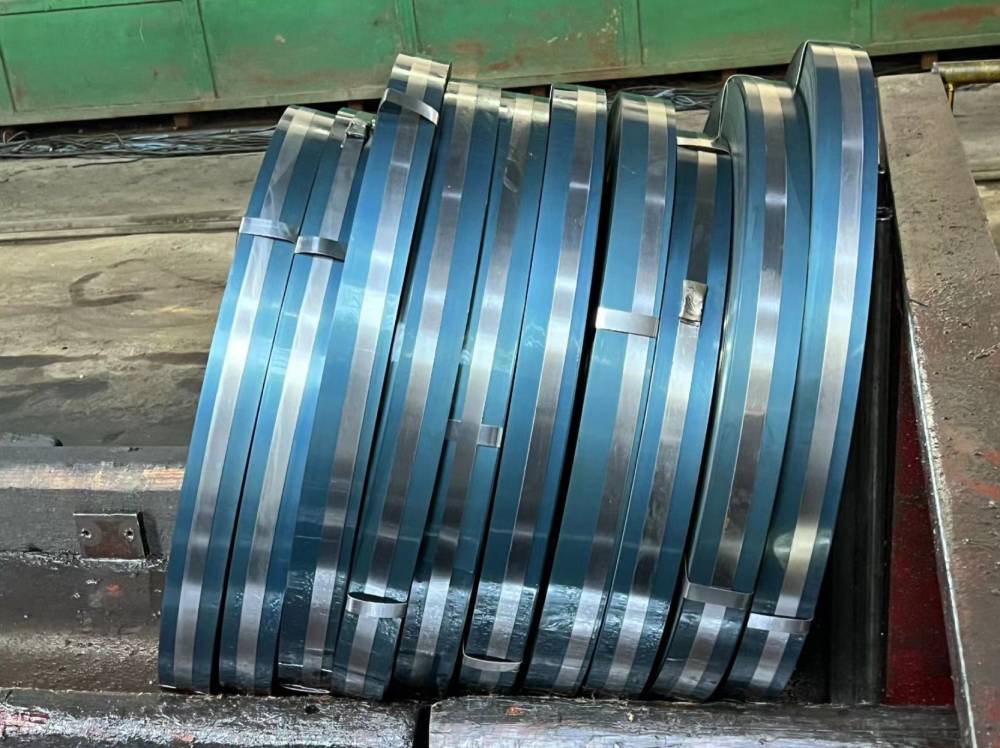
Your saw blade or spring will only perform well if this step is done right. That’s why many high-end products come with cứng & dải thép nóng tính.
✅ Stainless Steel: Ủ, Hardening, or Work-Hardening
Stainless steel behaves differently. Heat treatment varies by grade:
- 420: Can be hardened like carbon steel, but won’t reach the same hardness.
- 301: Cold-rolled and work-hardened—great for forming and spring action, even without tempering.
The goal here is usually to maintain ductility Và formability, not maximum hardness.
?️ Choosing the Right Metal: Real-World Scenarios
Let’s get practical. Here’s how you choose between them:
| Ứng dụng | Go with High Carbon Steel | Go with Stainless Steel |
|---|---|---|
| Knife blades | ✅ Holds edge longer | ? Needs frequent sharpening |
| Spring parts | ✅ High rebound & Kháng mệt mỏi | ✅ For corrosive environments |
| Công cụ & saws | ✅ Higher hardness, more wear-resistant | ? Limited in extreme workloads |
| Food processing | ❌ Will rust | ✅ Easy to clean & sanitize |
| Humid/outdoor use | ❌ Needs coating | ✅ Rust-resistant |
Still unsure? Ask yourself:
“Will this part face high stress or need long-term durability under load?”
Go high carbon.
“Is it exposed to moisture, Hóa chất, or hygiene-sensitive settings?”
Go không gỉ.
? What Buyers Should Really Watch For
It’s not just about the grade—it’s about how the steel is processed.
- Heat treatment quality matters more than just the name of the steel.
- Always ask for mechanical properties, not just chemical composition.
- Don’t skip on surface finish or thickness tolerance—it can ruin downstream processing.
And finally: Choose a supplier who understands your application. One that doesn’t just sell you steel, but helps you select, test, and customize what you need.
Final Thought
High carbon steel and stainless steel both have their place—but picking the wrong one means early failure, rust, breakage, or poor performance.
Tại jiaxiao MTC, we specialize in cold rolled, hardened and tempered high carbon and stainless steel strips. Whether you need edge-holding power or rust resistance, we’ll help you pick the right strip, treated the right way.
Need advice for your application?
We’re happy to help you find the right steel for your job—no guesswork, just results.