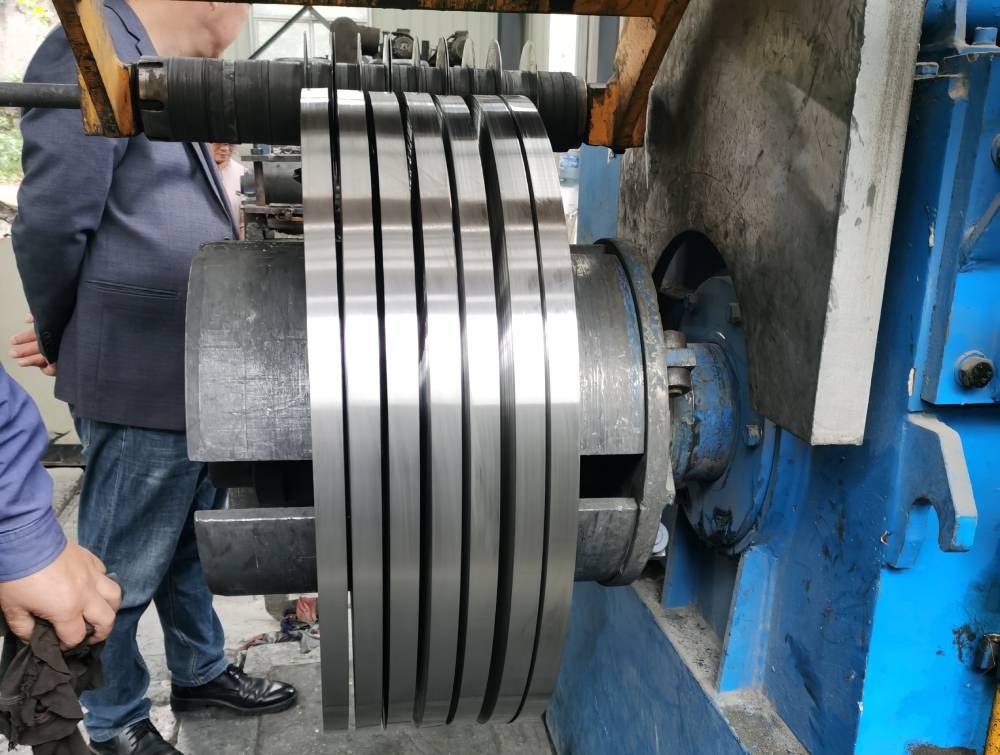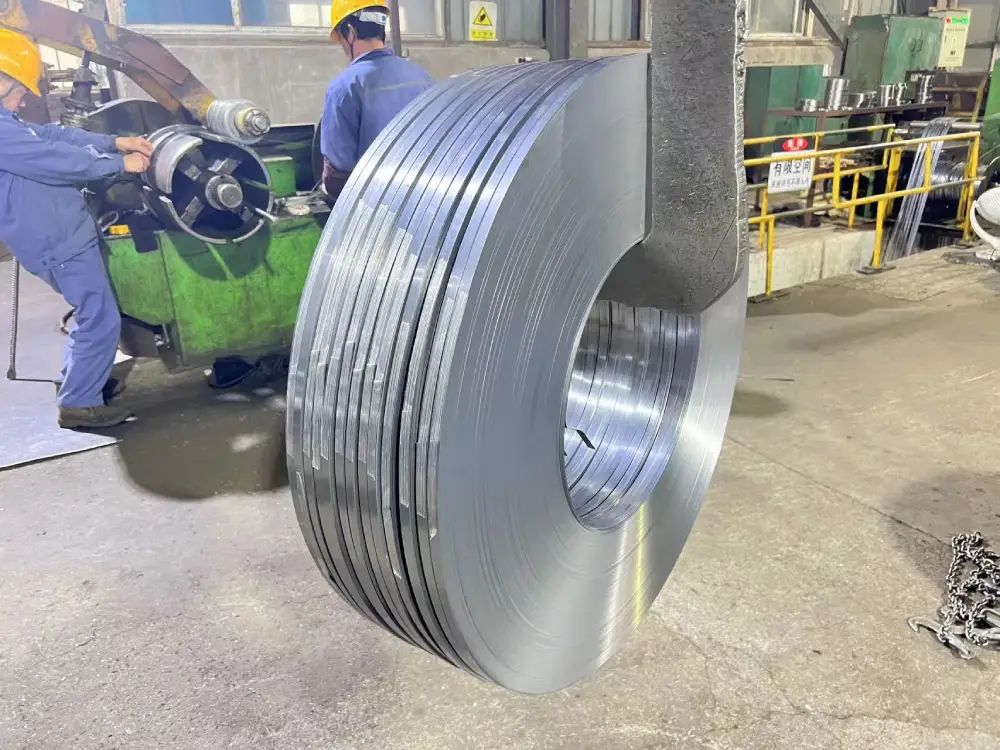
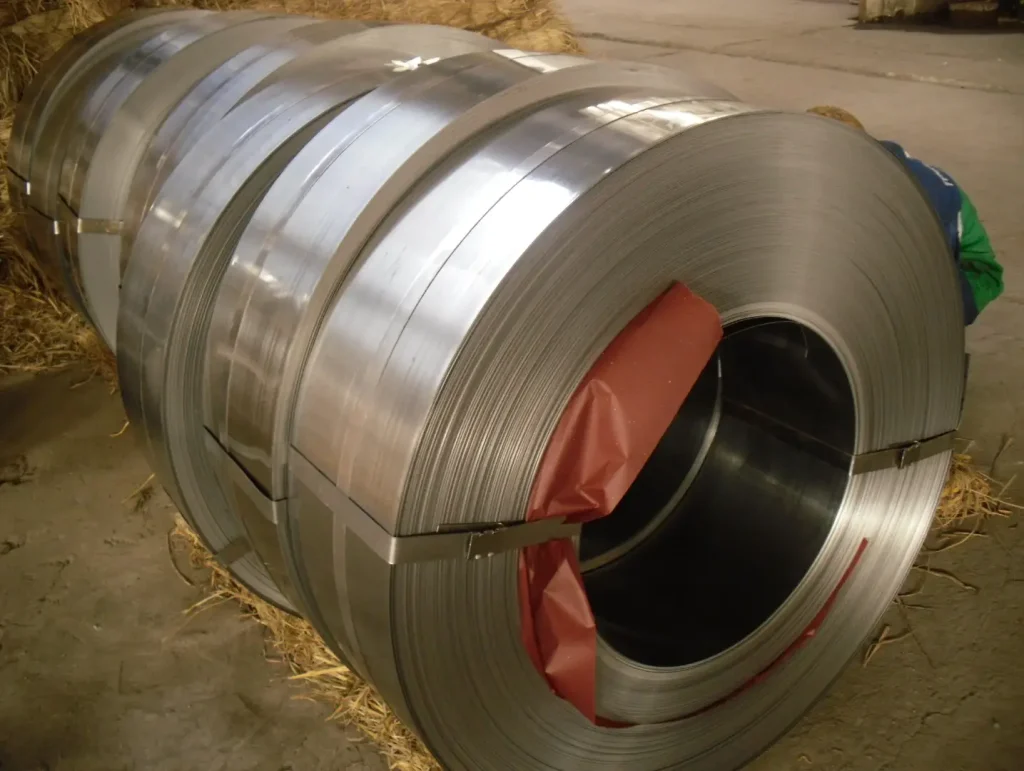
If you’re in the business of making springs or other small mechanical parts, you’ve likely heard of 65Mn heat-treated spring steel strip. This steel grade is a real workhorse – strong, đáng tin cậy, and cost-effective. Trong bài đăng trên blog này, we’ll break down what makes 65Mn special, how it’s treated, and why so many industries rely on it. We’ll keep things simple and straight to the point while still diving into the technical details you need to know.
What’s So Special About 65Mn?
65Mn is prized for its high tensile strength and balanced mechanical properties. In plain terms, this means the steel can handle a lot of stress without breaking, which is exactly what you want in any spring. The secret lies in its composition: with just the right amount of carbon and manganese, 65Mn offers a perfect mix of hardness and flexibility. When it comes off the production line in its raw form, it typically has a hardness of about HRC25 and a tensile strength near 1000 MPA. These numbers show that 65Mn is built to last.
How Is It Made? The Heat Treatment Process
To really bring out its best qualities, 65Mn goes through a special heat treatment process:
- Làm dịu đi: The steel is heated to around 800–850°C (usually about 830°C) and then quickly cooled down in oil. This rapid cooling transforms its internal structure, giving the steel the strength it’s known for.
- Ủ: Right after quenching, the steel is reheated to about 540°C (sometimes a bit lower, between 180°C and 320°C, depending on the end-use). This step helps balance out the hardness (bringing it up to around HRC50–HRC54) while keeping it tough enough to resist cracking.
Because of its high carbon and manganese levels, 65Mn isn’t ideal for bending straight away. If you need to bend or shape it, manufacturers often perform a spheroidizing annealing process to soften the steel, making it easier to work with.
Where Is 65Mn Used?
65Mn isn’t just a lab experiment – it finds real-world applications in several industries:
1. Automotive Sector
- Suspension and Valve Springs: In cars, every little spring counts. 65Mn is a favorite for making suspension springs, valve springs, and even engine springs because it delivers both strength and durability.
2. Industrial and Commercial Equipment
- Flat, Tròn, and Seat Springs: Whether it’s for machinery or furniture, these springs need to hold up under pressure. 65Mn does the job reliably, making it perfect for a wide range of industrial applications.
- Clutch and Brake Springs: Safety-critical parts like clutch and brake springs also benefit from the toughness of 65Mn.
3. Fasteners and Retaining Components
- Spring Washers and Elastic Pins: Because of its robust nature, 65Mn is used in making small parts that need to hold things together under vibration and stress.
4. Tools and Equipment
- Saw Blades and Chain Links: In the tool-making world, wear resistance is key. 65Mn is used to make items like saw blades where durability is a must.
Challenges and Best Practices
Even the best materials come with a few quirks. Here’s what you need to know about working with 65Mn:
- Heat Treatment Sensitivity:
The process must be carefully controlled. Overheating or improper tempering can lead to cracks or brittle spots in the steel. Precision is key! - Formability:
Because 65Mn is so hard in its as-rolled state, bending or fine blanking requires pre-treatment (like spheroidizing annealing) to soften it a bit. - Kháng ăn mòn:
While 65Mn is tough mechanically, it doesn’t naturally fight off rust very well. If you’re using it in a corrosive environment, additional surface treatments or protective coatings might be necessary.
Wrapping Up
65Mn heat-treated spring steel strip is a top choice for making durable springs and other mechanical components. Its blend of high strength, good wear resistance, and excellent elasticity makes it a go-to material for the automotive, industrial, and tool-making sectors. With the right heat treatment – quenching and tempering – 65Mn can meet the rigorous demands of modern manufacturing.
By understanding its properties, processing needs, and best practices, you can make smarter decisions about using 65Mn in your projects. Whether you’re designing car parts or industrial equipment, this steel offers a reliable solution that combines strength and flexibility in one neat package.
If you found this guide useful or have any questions about 65Mn, feel free to leave a comment or get in touch. Let’s keep the conversation going!