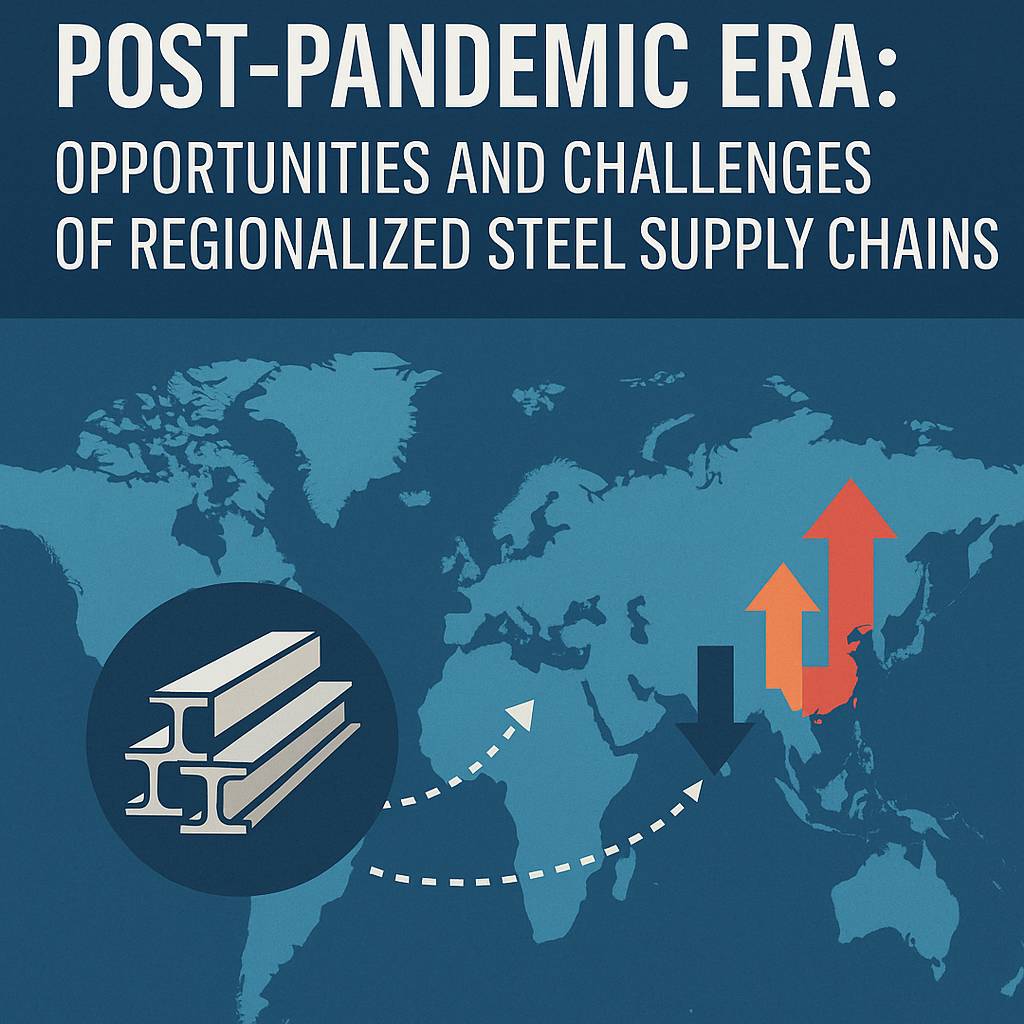
The COVID-19 pandemic reshaped global supply chains across industries, and the steel sector has been no exception. As we move into the post-pandemic era, regionalization is emerging as a defining trend in the steel supply chain. While Asia and the Middle East show strong growth momentum, China—traditionally the largest consumer of steel—is experiencing a slowdown in demand. This creates both opportunities and challenges for global steel producers.
The Shift Toward Regionalization
Global disruptions, including logistics bottlenecks, rising freight costs, and geopolitical tensions, have accelerated the shift from globalized supply chains to regionally integrated networks. For steel manufacturers, this trend means:
- Shorter lead times through local production and distribution hubs
- Reduced risk exposure to global shipping volatility
- Closer alignment with regional policy and trade frameworks
Regionalization is not about replacing globalization, but about building resilience and flexibility in steel supply chains.
Growth Opportunities in Asia and the Middle East
While China’s demand cools, other Asian economies such as India, Vietnam, and Indonesia are ramping up infrastructure and construction projects. At the same time, the Middle East—driven by energy diversification plans and massive infrastructure investments—is becoming a key growth market.
Key opportunities include:
- India’s urbanization boom fueling demand for construction steel
- Vietnam’s manufacturing expansion boosting consumption of flat and specialty steels
- Middle Eastern mega-projects such as Saudi Arabia’s NEOM creating sustained demand for long products and structural steel
These regions present attractive markets for steel producers seeking growth outside of China.
Challenges of Declining Chinese Demand
China has long been the backbone of global steel demand, but factors such as slower economic growth, real estate sector weakness, and structural overcapacity are leading to a decline in steel consumption.
Challenges include:
- Oversupply pressure as Chinese mills seek export markets
- Price volatility due to weaker domestic demand in China
- Competitive pressure for producers in other regions facing Chinese exports
This shift requires steelmakers to rethink market strategies and strengthen their presence in emerging regional hubs.
Strategic Outlook for Steel Producers
To thrive in the post-pandemic era, steel companies need to:
- Diversify export destinations toward Asia, the Middle East, and Africa
- Invest in regional hubs to serve customers closer to end markets
- Enhance supply chain resilience through digitalization and inventory optimization
- Adapt product portfolios to align with regional demand (e.g., infrastructure steel in Asia, oil & gas steel in the Middle East)
Conclusion
The post-pandemic steel supply chain is no longer defined by a single global growth engine. Instead, it is shaped by regional dynamics, with Asia and the Middle East driving momentum while China slows down. For steel producers, the future lies in regional adaptability, resilience, and strategic diversification.
The opportunity is clear: build regional strength today to secure global competitiveness tomorrow.